AI Chatbots and Assistants

Explore the best AI Chatbots and Assistants — independent reviews, comparisons, pricing and step-by-step how-to guides, curated by Aizhi.

  • Calais (Reuters product)

    Calais (Reuters product)

    Calais is a service created by Thomson Reuters that automatically extracts semantic information from web pages in a format that can be used on the semantic web. Calais was launched in January 2008, and is free to use. The technology is now available via the website of Refinitiv, a provider of financial market data and infrastructure founded in 2018, that is a subsidiary of London Stock Exchange Group. The Calais Web service reads unstructured text and returns Resource Description Framework formatted results identifying entities, facts and events within the text. The service appears to be based on technology acquired when Reuters purchased ClearForest in 2007. The technology has also been used to automatically tag blog articles, and organize museum collections. Calais uses natural language processing technologies delivered via a web service interface.

    Read more →
  • Native cloud application

    Native cloud application

    A native cloud application (NCA) is a type of computer software that natively utilizes services and infrastructure from cloud computing providers such as Amazon EC2, Force.com, or Microsoft Azure. NCAs exhibit a combined usage of the three fundamental technologies: Computational grid - loosely, e.g. MapReduce Data grids (e.g. distributed in-memory data caches) Auto-scaling on any managed infrastructure

    Read more →
  • Web application firewall

    Web application firewall

    A Web application firewall (WAF) is a specific form of application firewall that filters, monitors, and blocks HTTP traffic to and from a web service. By inspecting HTTP traffic, it can prevent attacks exploiting a Web application's known vulnerabilities, such as SQL injection, cross-site scripting (XSS), file inclusion, and improper system configuration. Financial institutions often utilize WAFs to help in the mitigation of Web application zero-day vulnerabilities, as well as hard-to-patch bugs or weaknesses through custom attack signature strings. == History == Dedicated Web application firewalls entered the market in the late 1990s during a time when web server attacks were becoming more prevalent. Early WAF products, from Kavado and Gilian technologies, tried to solve the increasing amount of attacks on Web applications in the late 1990s. In 2002, the open-source project ModSecurity was formed in order to make WAF technology more accessible. They finalized a core rule set for protecting Web applications, based on OASIS Web Application Security Technical Committee’s (WAS TC) vulnerability work. In 2003, they expanded and standardized rules through the Open Web Application Security Project’s (OWASP) Top 10 List, an annual ranking for Web security vulnerabilities. This list would become the industry standard for Web application security compliance. Since then, the market has continued to grow and evolve, especially focusing on credit card fraud prevention. With the development of the Payment Card Industry Data Security Standard (PCI DSS), a standardization of control over cardholder data, security has become more regulated in this sector. == Description == A Web application firewall is a special type of application firewall that applies specifically to Web applications. It is deployed in front of Web applications and analyzes bi-directional web-based (HTTP) traffic – detecting and blocking anything malicious. The OWASP provides a broad technical definition for a WAF as “a security solution on the Web application level which – from a technical point of view – does not depend on the application itself”. According to the PCI DSS Information Supplement for requirement 6.6, a WAF is defined as “a security policy enforcement point positioned between a Web application and the client endpoint. This functionality can be implemented in software or hardware, running in an appliance device, or in a typical server running a common operating system. It may be a stand-alone device or integrated into other network components.” In other words, a WAF can be a virtual or physical appliance that prevents vulnerabilities in Web applications from being exploited by outside threats. These vulnerabilities may be because the application itself is a legacy type or was insufficiently coded by design. The WAF addresses these code shortcomings by special configurations of rule-sets, also known as policies. Previously unknown vulnerabilities can be discovered through penetration testing or via a vulnerability scanner. A Web application vulnerability scanner, also known as a web application security scanner, is defined in the SAMATE NIST 500-269 as “an automated program that examines Web applications for potential security vulnerabilities. In addition to searching for Web application-specific vulnerabilities, the tools also look for software coding errors.” Resolving vulnerabilities is commonly referred to as remediation. Corrections to the code can be made in the application, but typically a more prompt response is necessary. In these situations, the application of a custom policy for a unique Web application vulnerability to provide a temporary but immediate fix (known as a virtual patch) may be necessary. WAFs are not an ultimate security solution, rather they are meant to be used in conjunction with other network perimeter security solutions such as network firewalls and intrusion prevention systems to provide a holistic defense strategy. WAFs typically follow a positive security model, a negative security, or a combination of both as mentioned by the SANS Institute. WAFs use a combination of rule-based logic, parsing, and signatures to detect and prevent attacks such as cross-site scripting and SQL injection. In general, features like browser emulation, obfuscation and virtualization, and IP obfuscation are used to attempt to bypass WAFs. The OWASP produces a list of the top ten Web application security flaws. All commercial WAF offerings cover these ten flaws at a minimum. There are non-commercial options as well. As mentioned earlier, the well-known open-source WAF engine called ModSecurity is one of these options. A WAF engine alone is insufficient to provide adequate protection, therefore OWASP along with Trustwave's Spiderlabs help organize and maintain a Core-Rule Set via GitHub to use with the ModSecurity WAF engine. == Deployment options == Although the names for operating mode may differ, WAFs are basically deployed inline in three different ways. According to NSS Labs, deployment options are transparent bridge, transparent reverse proxy, and reverse proxy. "Transparent" refers to the fact that the HTTP traffic is sent straight to the Web application, therefore the WAF is transparent between the client and server. This is in contrast to reverse proxy, where the WAF acts as a proxy, and the client’s traffic is sent directly to the WAF. The WAF then separately sends filtered traffic to Web applications. This can provide additional benefits such as IP masking but may introduce disadvantages such as performance latencies. == JA3 fingerprint == JA3, developed by Salesforce in 2017, is a technique for generating a unique fingerprint for SSL/TLS traffic based on specific fields in the handshake, such as the version, cipher suites, and extensions used by the client. This fingerprint enables the identification and tracking of clients based on the characteristics of their encrypted traffic. In the context of distributed denial of service (DDoS) protection, JA3 fingerprints are used to detect and differentiate malicious traffic, often associated with attack bots, from legitimate traffic, allowing for more precise filtering of potential threats. In September 2023, AWS WAF announced built-in support for JA3, enabling customers to inspect the JA3 fingerprints of incoming requests. JA3 was deprecated in May 2025 in favor of JA4. JA4 is currently patent pending.

    Read more →
  • Object model

    Object model

    In computing, object model has two related but distinct meanings: The properties of objects in general in a specific computer programming language, technology, notation or methodology that uses them. Examples are the object models of Java, the Component Object Model (COM), or Object-Modeling Technique (OMT). Such object models are usually defined using concepts such as class, generic function, message, inheritance, polymorphism, and encapsulation. There is an extensive literature on formalized object models as a subset of the formal semantics of programming languages. A collection of objects or classes through which a program can examine and manipulate some specific parts of its world. In other words, the object-oriented interface to some service or system. Such an interface is said to be the object model of the represented service or system. For example, the Document Object Model (DOM) is a collection of objects that represent a page in a web browser, used by script programs to examine and dynamically change the page. There is a Microsoft Excel object model [1] for controlling Microsoft Excel from another program, and the ASCOM Telescope Driver is an object model for controlling an astronomical telescope. == Features == An object model consists of the following important features: === Object reference === Objects can be accessed via object references. To invoke a method in an object, the object reference and method name are given, together with any arguments. === Interfaces === An interface provides a definition of the signature of a set of methods without specifying their implementation. An object will provide a particular interface if its class contains code that implement the method of that interface. An interface also defines types that can be used to declare the type of variables or parameters and return values of methods. === Actions === An action in object-oriented programming (OOP) is initiated by an object invoking a method in another object. An invocation can include additional information needed to carry out the method. The receiver executes the appropriate method and then returns control to the invoking object, sometimes supplying a result. === Exceptions === Programs can encounter various errors and unexpected conditions of varying seriousness. During the execution of the method many different problems may be discovered. Exceptions provide a clean way to deal with error conditions without complicating the code. A block of code may be defined to throw an exception whenever particular unexpected conditions or errors arise. This means that control passes to another block of code that catches the exception.

    Read more →
  • Pixel shift

    Pixel shift

    Pixel shift is a method in digital cameras for producing a super-resolution image. The method works by taking several images, after each such capture moving ("shifting") the sensor to a new position. In digital colour cameras that employ pixel shift, this avoids a major limitation inherent in using Bayer pattern for obtaining colour, and instead produces an image with increased colour resolution and, assuming a static subject or additional computational steps, an image free of colour moiré. Taking this idea further, sub-pixel shifting may increase the resolution of the final image beyond that suggested by the specified resolution of the image sensor. Additionally, assuming that the various individual captures are taken at the same sensitivity, the final combined image will have less image noise than a single capture. This can be thought of as an averaging effect (for instance, in a pixel shift image composed of four individual frames with a classic Bayer pattern, every pixel in the final colour image is based on two measurements of the green channel). == List of cameras implementing pixel shift == All of the following cameras are fabricated with one imaging sensor, thus any kind of pixel shift requires a movement of the whole sensor. === Canon === Canon R5: Contains a 45 Mpixel sensor. The High-Resolution Mode shifts the sensor by one pixel to obtain a sequence of nine images that are merged into a 400 Mpixel image. === Fujifilm === Fujifilm GFX50S II: contains a 51 Mpixel sensor. The Pixel Shift Multi-Shot mode shifts the imaging sensor by 0.5-pixel movements to obtain a sequence of 16 images that are subsequently merged into a 200 Mpixel image. Fujifilm GFX100, Fujifilm GFX100 II: contains a 102 Mpixel sensor. A sequence of 16 pixel shifted images are merged into a 400 Mpixel image. Fujifilm GFX100S, Fujifilm GFX100S II: contains a 102 Mpixel sensor. A sequence of 16 pixel shifted images are merged into a 400 Mpixel image Fujifilm GFX100IR: contains a 102 Mpixel sensor. A sequence of 16 pixel shifted images are merged into a 400 Mpixel image Fujifilm X-H2: contains a 40 Mpixel sensor. A sequence of 20 shifted images are merged into a 160 Mpixel image. Fujifilm X-T5: contains a 40 Mpixel sensor. A sequence of 20 shifted images are merged into a 160 Mpixel image. === Nikon === Nikon Z8: contains a 47.5 Mpixel sensor. The High Res shot mode shifts the imaging sensor by 0.5-pixel movements to obtain a sequence of up to 32 images that can be merged in Nikon's NX studio software. Nikon Zf: contains a 24 Mpixel sensor. The High Res shot mode shifts the imaging sensor by 0.5-pixel movements to obtain a sequence of up to 32 images that can be merged in Nikon's NX studio software. === Olympus === Olympus OM-D E-M1 Mark II: contains a 20.4 Mpixel sensor. The High Res shot mode produces a 50 Mpixel image. Olympus OM-D E-M5 Mark II: contains a 16 Mpixel sensor. The High Res shot mode shifts the imaging sensor by 0.5-pixel movements to obtain a sequence of 8 images that are subsequently merged into a 40 Mpixel image. Olympus OM-D E-M5 Mark III: contains a 20.4 Mpixel sensor. The High Res shot mode shifts the imaging sensor by 0.5-pixel movements to obtain a sequence of 8 images that are subsequently merged into a 50 Mpixel image. Olympus OM-D E-M1X: contains a 20.4 Mpixel sensor. The camera sports two pixel shift mode: (a) the 80Mp Tripod mode produces an 80 Mpixel image, (b) the Handheld High Res shot mode produces a 50 Mpixel image. Olympus PEN-F: contains a 20.4 Mpixel sensor. The High Res Shot mode takes multiple images, continually shifting the position of the sensor in sub-pixel increments. Combining these images results in either a 50MP JPEG or an 80MP Raw file. ==== OM System ==== OM System OM-1: contains a 20MPix sensor. The High Res Shot mode takes multiple images, and it can be used handheld or on a tripod. Handheld it will internally produce 50 Mpix files and 80 Mpix when mounted on a tripod. OM System OM-5: contains a 20MPix sensor. The High Res Shot mode takes multiple images, and it can be used handheld or on a tripod. Handheld it will internally produce 50 Mpix files and 80 Mpix when mounted on a tripod. === Panasonic === Panasonic Lumix DC-G9: contains a 20.3 Mpixel sensor. The High Resolution Mode takes a sequence of 8 shots in quick succession between which the sensor is shifted by 0.5 pixel for each image. These are subsequently merged into an 80 Mpixel image. Panasonic Lumix DC-S1: contains a 24.2 Mpixel sensor. The High Resolution Mode takes a sequence of shots in quick succession between which the sensor is shifted by a small amount. These are subsequently merged into a 96 Mpixel image. Panasonic Lumix DC-S1R: contains a 47.3 Mpixel sensor. The High Resolution Mode shifts the imaging sensor by a small increments to obtain a sequence of 8 images that are subsequently merged into a 187 Mpixel image. Panasonic Lumix DC-S1H Panasonic Lumix DC-S5 === Pentax === Pentax K-70: contains a 24.3 Mpixel sensor. The pixel shift mode takes a sequence of 4 shots between which the sensor is shifted by 1 pixel. These are subsequently merged into an image sporting 'all color data in each pixel to deliver super-high-resolution images'. Pentax KP: contains a 24.3 Mpixel sensor. The pixel shift mode takes a sequence of 4 shots between which the sensor is shifted by 1 pixel. These are subsequently merged into an image sporting 'high-resolution images with more accurate colours and much finer details'. Pentax K-3 II: contains a 24.3 Mpixel sensor. The pixel shift mode takes a sequence of 4 shots between which the sensor is shifted by 1 pixel. These are subsequently merged into an image sporting 'super-high-resolution images with far more truthful color reproduction and much finer details'. Pentax K-3 III: contains a 25.7 Mpixel sensor. The pixel shift mode takes a sequence of 4 shots between which the sensor is shifted by 1 pixel. These are subsequently merged into an image sporting 'a cancelling out of the Bayer pattern and removal of the need for sharpness-sapping demosaicing'. Pentax K-1: contains a 36.4 Mpixel sensor. The pixel shift mode takes a sequence of 4 shots between which the sensor is shifted by 1 pixel. These are subsequently merged into an image sporting 'improved detail and colour resolution'. Pentax K-1 II: contains a 36.4 Mpixel sensor. The camera sports two pixel shift mode: (a) a series of 4 tripod-stabilised images shifted by 1 pixel each are subsequently combined into a 47.3 Mpixel image, (b) a series of images taken in handheld mode are combined into a 47.3 Mpixel image that is, within limits, able to cope even with moving subjects. === Sony === Sony a6600: contains a 24.3 Mpixel sensor. The pixel shift mode takes a sequence of 4 shots between which the sensor is shifted by 1 pixel. These are subsequently merged into an image sporting 'all color data in each pixel to deliver super-high-resolution images'. Sony α7R III: contains a 42.4 Mpixel sensor. The pixel shift mode takes a sequence of 4 shots between which the sensor is shifted by 1 pixel. These are subsequently merged into a 42.4 Mpixel image with improved tonal resolution. Sony α7R IV: contains a 61 Mpixel sensor. The camera has two pixel shift modes, (a) the first takes a sequence of 4 shots between which the sensor is shifted by 1 pixel. These are subsequently merged into a 61 Mpixel image with improved tonal resolution, (b) the other takes a sequence of 16 shots between which the sensor is shifted by 0.5 pixel. These are subsequently merged into a 240 Mpixel image with both enhanced detail and improved tonal resolution. Sony α1: contains a 50 Mpixel sensor. The camera has two pixel shift modes, (a) the first takes a sequence of 4 shots between which the sensor is shifted by 1 pixel. These are subsequently merged into a 50 Mpixel image with improved tonal resolution, (b) the other takes a sequence of 16 shots between which the sensor is shifted by 0.5 pixel. These are subsequently merged into a 200 Mpixel image with both enhanced detail and improved tonal resolution. === Hasselblad === Hasselblad H3DII: the model H3DII-39 sports a 39 Mpixel sensor, the model H3DII-50 a 50 Mpixel sensor. Both enable a pixel shift mode which takes a sequence of 4 shots between which the sensor is shifted by 1 pixel. These are subsequently merged into a single image. Hasselblad H4D series: the model H4D-200MS contains a 50 Mpixel sensor. The sensor sports 3 different pixel shift modes which take (a) a sequence of 6 shots taken at slight offsets, (b) a sequence of 4 shots between which the sensor is shifted by 1 pixel, (c) a sequence of 4 shots between which the sensor is shifted by 0.5 pixels. Images obtained by all three modes are subsequently merged into 200 Mpixel images. Hasselblad H5D series: both models H5D-50c MS and H5D-200c MS contain a 50 Mpixel sensor. This sensor sports 2 different pixel shift modes which take (a) a sequence of 6 shots with full and half pixel moveme

    Read more →
  • TimeTiger

    TimeTiger

    TimeTiger is a time and project tracking app developed by Indigo Technologies Ltd. in Toronto, Ontario, Canada. Indigo was founded in 1997 and initially released TimeTiger in 1998. == Company == The company was incorporated in 1997 and began operations as a custom software developer. TimeTiger (internally called TaskMaster) was developed as a tool to help with Indigo's own project planning and estimating. After releasing TimeTiger as a commercial product in 1998, Indigo shifted its focus to time and project management solutions. TimeTiger first introduced support for web-based time logging in 2000, to appeal to workers who were not already tracking their time for billing reasons. Subsequent development emphasized project analysis tools. == Features == Web-based electronic time log "To Do" list to monitor project and non-project activities Pivot table report designer Role-based access control == Software integration == Reports can be exported to Microsoft Excel or saved as Excel-compatible HTML files. Microsoft Project files can be imported and exported. A Software Development Kit is available.

    Read more →
  • Teaspiller

    Teaspiller

    Teaspiller was a US-based web application for customers to find accountants and hire them to do their taxes and accounting online. In 2013 the company was acquired by Intuit, Inc and added to its TurboTax product line. The Teaspiller employees and code were all acquired and the product was renamed as "TurboTax CPA select". It enabled accountants to work remotely with clients (share files, send secure messages, schedule appointments), as well as find new clients looking for their specific skills through a complex search algorithm. This was done through extended profiles containing licensing information, professional histories, user ratings, peer endorsements, association memberships, and practice areas. The service had been called an H&R Block killer by Business Insider as it helped customers find accountants to prepare tax returns online. As of 2011 it had 20,000 US accountants listed on the site. The application was built using the Django framework. == History == Teaspiller was built by Vemdara, LLC, a web company based in New York and founded in 2009 by Amit Vemuri (a former VP at Travelocity). The web application was launched in 2010. In 2013 the company was acquired by Intuit as part of their TurboTax product line and renamed as "TurboTax CPA select".

    Read more →
  • Flat-field correction

    Flat-field correction

    Flat-field correction (FFC) is a digital imaging technique to mitigate pixel-to-pixel differences in the photodetector sensitivity and distortions in the optical path. It is a standard calibration procedure in everything from personal digital cameras to large telescopes. == Overview == Flat fielding refers to the process of compensating for different gains and dark currents in a detector. Once a detector has been appropriately flat-fielded, a uniform signal will create a uniform output (hence flat-field). This then means any further signal is due to the phenomenon being detected and not a systematic error. A flat-field image is acquired by imaging a uniformly-illuminated screen, thus producing an image of uniform color and brightness across the frame. For handheld cameras, the screen could be a piece of paper at arm's length, but a telescope will frequently image a clear patch of sky at twilight, when the illumination is uniform and there are few, if any, stars visible. Once the images are acquired, processing can begin. A flat-field consists of two numbers for each pixel, the pixel's gain and its dark current (or dark frame). The pixel's gain is how the amount of signal given by the detector varies as a function of the amount of light (or equivalent). The gain is almost always a linear variable, as such the gain is given simply as the ratio of the input and output signals. The dark-current is the amount of signal given out by the detector when there is no incident light (hence dark frame). In many detectors this can also be a function of time, for example in astronomical telescopes it is common to take a dark-frame of the same time as the planned light exposure. The gain and dark-frame for optical systems can also be established by using a series of neutral density filters to give input/output signal information and applying a least squares fit to obtain the values for the dark current and gain. C = ( R − D ) × m ( F − D ) = ( R − D ) × G {\displaystyle C={\frac {(R-D)\times m}{(F-D)}}=(R-D)\times G} where: C = corrected image R = raw image F = flat field image D = dark frame image m = image-averaged value of (F−D) G = Gain = m ( F − D ) {\displaystyle m \over (F-D)} In this equation, capital letters are 2D matrices, and lowercase letters are scalars. All matrix operations are performed element-by-element. In order for an astrophotographer to capture a light frame, they must place a light source over the imaging instrument's objective lens such that the light source emanates evenly through the users optics. The photographer must then adjust the exposure of their imaging device (charge-coupled device (CCD) or digital single-lens reflex camera (DSLR) ) so that when the histogram of the image is viewed, a peak reaching about 40–70% of the dynamic range (maximum range of pixel values) of the imaging device is seen. The photographer typically takes 15–20 light frames and performs median stacking. Once the desired light frames are acquired, the objective lens is covered so that no light is allowed in, then 15–20 dark frames are taken, each of equal exposure time as a light frame. These are called Dark-Flat frames. == In X-ray imaging == In X-ray imaging, the acquired projection images generally suffer from fixed-pattern noise, which is one of the limiting factors of image quality. It may stem from beam inhomogeneity, gain variations of the detector response due to inhomogeneities in the photon conversion yield, losses in charge transport, charge trapping, or variations in the performance of the readout. Also, the scintillator screen may accumulate dust and/or scratches on its surface, resulting in systematic patterns in every acquired X-ray projection image. In X-ray computed tomography (CT), fixed-pattern noise is known to significantly degrade the achievable spatial resolution and generally leads to ring or band artifacts in the reconstructed images. Fixed pattern noise can be easily removed using flat field correction. In conventional flat field correction, projection images without sample are acquired with and without the X-ray beam turned on, which are referred to as flat fields (F) and dark fields (D). Based on the acquired flat and dark fields, the measured projection images (P) with sample are then normalized to new images (N) according to: N = ( P − D ) ( F − D ) {\displaystyle N={\frac {(P-D)}{(F-D)}}} == Dynamic flat field correction == While conventional flat field correction is an elegant and easy procedure that largely reduces fixed-pattern noise, it heavily relies on the stationarity of the X-ray beam, scintillator response and CCD sensitivity. In practice, however, this assumption is only approximately met. Indeed, detector elements are characterized by intensity dependent, nonlinear response functions and the incident beam often shows time dependent non-uniformities, which render conventional FFC inadequate. In synchrotron X-ray tomography, many factors may cause flat field variations: instability of the bending magnets of the synchrotron, temperature variations due to the water cooling in mirrors and the monochromator, or vibrations of the scintillator and other beamline components. The latter is responsible for the biggest variations in the flat fields. To deal with such variations, a dynamic flat field correction procedure can be employed that estimates a flat field for each individual projection. Through principal component analysis of a set of flat fields, which are acquired prior and/or posterior to the actual scan, eigen flat fields can be computed. A linear combination of the most important eigen flat fields can then be used to individually normalize each X-ray projection: N j = P j − D ¯ F ¯ + ∑ k w j k u k − D ¯ {\displaystyle N_{j}={\frac {P_{j}-{\bar {D}}}{{\bar {F}}+\sum _{k}w_{jk}u_{k}-{\bar {D}}}}} where N j {\displaystyle N_{j}} = intensity normalized X-ray projection P j {\displaystyle P_{j}} = raw X-ray projection F ¯ {\displaystyle {\bar {F}}} = mean flat field image (average of flat fields) u k {\displaystyle u_{k}} = k-th eigen flat field w j k {\displaystyle w_{jk}} = weight of the eigen flat field u k {\displaystyle u_{k}} D ¯ {\displaystyle {\bar {D}}} = mean dark field (average of dark fields)

    Read more →
  • Automated decision-making

    Automated decision-making

    Automated decision-making (ADM) is the use of data, machines and algorithms to make decisions in a range of contexts, including public administration, business, health, education, law, employment, transport, media and entertainment, with varying degrees of human oversight or intervention. ADM may involve large-scale data from a range of sources, such as databases, text, social media, sensors, images or speech, that is processed using various technologies including computer software, algorithms, machine learning, natural language processing, artificial intelligence, augmented intelligence and robotics. The increasing use of automated decision-making systems (ADMS) across a range of contexts presents many benefits and challenges to human society requiring consideration of the technical, legal, ethical, societal, educational, economic and health consequences. == Overview == There are different definitions of ADM based on the level of automation involved. Some definitions suggests ADM involves decisions made through purely technological means without human input, such as the EU's General Data Protection Regulation (Article 22). However, ADM technologies and applications can take many forms ranging from decision-support systems that make recommendations for human decision-makers to act on, sometimes known as augmented intelligence or 'shared decision-making', to fully automated decision-making processes that make decisions on behalf of individuals or organizations without human involvement. Models used in automated decision-making systems can be as simple as checklists and decision trees through to artificial intelligence and deep neural networks (DNN). Since the 1950s computers have gone from being able to do basic processing to having the capacity to undertake complex, ambiguous and highly skilled tasks such as image and speech recognition, gameplay, scientific and medical analysis and inferencing across multiple data sources. ADM is now being increasingly deployed across all sectors of society and many diverse domains from entertainment to transport. An ADM system (ADMS) may involve multiple decision points, data sets, and technologies (ADMT) and may sit within a larger administrative or technical system such as a criminal justice system or business process. == Data == Automated decision-making involves using data as input to be analyzed within a process, model, or algorithm or for learning and generating new models. ADM systems may use and connect a wide range of data types and sources depending on the goals and contexts of the system, for example, sensor data for self-driving cars and robotics, identity data for security systems, demographic and financial data for public administration, medical records in health, criminal records in law. This can sometimes involve vast amounts of data and computing power. === Data quality === The quality of the available data and its ability to be used in ADM systems is fundamental to the outcomes. It is often highly problematic for many reasons. Datasets are often highly variable; corporations or governments may control large-scale data, restricted for privacy or security reasons, incomplete, biased, limited in terms of time or coverage, measuring and describing terms in different ways, and many other issues. For machines to learn from data, large corpora are often required, which can be challenging to obtain or compute; however, where available, they have provided significant breakthroughs, for example, in diagnosing chest X-rays. == ADM technologies == Automated decision-making technologies (ADMT) are software-coded digital tools that automate the translation of input data to output data, contributing to the function of automated decision-making systems. There are a wide range of technologies in use across ADM applications and systems. ADMTs involving basic computational operations Search (includes 1-2-1, 1-2-many, data matching/merge) Matching (two different things) Mathematical Calculation (formula) ADMTs for assessment and grouping: User profiling Recommender systems Clustering Classification Feature learning Predictive analytics (includes forecasting) ADMTs relating to space and flows: Social network analysis (includes link prediction) Mapping Routing ADMTs for processing of complex data formats Image processing Audio processing Natural Language Processing (NLP) Other ADMT Business rules management systems Time series analysis Anomaly detection Modelling/Simulation === Machine learning === Machine learning (ML) involves training computer programs through exposure to large data sets and examples to learn from experience and solve problems. Machine learning can be used to generate and analyse data as well as make algorithmic calculations and has been applied to image and speech recognition, translations, text, data and simulations. While machine learning has been around for some time, it is becoming increasingly powerful due to recent breakthroughs in training deep neural networks (DNNs), and dramatic increases in data storage capacity and computational power with GPU coprocessors and cloud computing. Machine learning systems based on foundation models run on deep neural networks and use pattern matching to train a single huge system on large amounts of general data such as text and images. Early models tended to start from scratch for each new problem however since the early 2020s many are able to be adapted to new problems. Examples of these technologies include Open AI's DALL-E (an image creation program) and their various GPT language models, and Google's PaLM language model program. == Applications == ADM is being used to replace or augment human decision-making by both public and private-sector organisations for a range of reasons including to help increase consistency, improve efficiency, reduce costs and enable new solutions to complex problems. === Debate === Research and development are underway into uses of technology to assess argument quality, assess argumentative essays and judge debates. Potential applications of these argument technologies span education and society. Scenarios to consider, in these regards, include those involving the assessment and evaluation of conversational, mathematical, scientific, interpretive, legal, and political argumentation and debate. === Law === In legal systems around the world, algorithmic tools such as risk assessment instruments (RAI), are being used to supplement or replace the human judgment of judges, civil servants and police officers in many contexts. In the United States RAI are being used to generate scores to predict the risk of recidivism in pre-trial detention and sentencing decisions, evaluate parole for prisoners and to predict "hot spots" for future crime. These scores may result in automatic effects or may be used to inform decisions made by officials within the justice system. In Canada ADM has been used since 2014 to automate certain activities conducted by immigration officials and to support the evaluation of some immigrant and visitor applications. === Economics === Automated decision-making systems are used in certain computer programs to create buy and sell orders related to specific financial transactions and automatically submit the orders in the international markets. Computer programs can automatically generate orders based on predefined set of rules using trading strategies which are based on technical analyses, advanced statistical and mathematical computations, or inputs from other electronic sources. === Business === ==== Continuous auditing ==== Continuous auditing uses advanced analytical tools to automate auditing processes. It can be utilized in the private sector by business enterprises and in the public sector by governmental organizations and municipalities. As artificial intelligence and machine learning continue to advance, accountants and auditors may make use of increasingly sophisticated algorithms which make decisions such as those involving determining what is anomalous, whether to notify personnel, and how to prioritize those tasks assigned to personnel. === Media and entertainment === Digital media, entertainment platforms, and information services increasingly provide content to audiences via automated recommender systems based on demographic information, previous selections, collaborative filtering or content-based filtering. This includes music and video platforms, publishing, health information, product databases and search engines. Many recommender systems also provide some agency to users in accepting recommendations and incorporate data-driven algorithmic feedback loops based on the actions of the system user. Large-scale machine learning language models and image creation programs being developed by companies such as OpenAI and Google in the 2020s have restricted access however they are likely to have widespread application in fields such as advertising, copywriting, stock imagery and gra

    Read more →
  • Django (web framework)

    Django (web framework)

    Django ( JANG-goh; sometimes stylized as django) is a free and open-source, Python-based web framework that runs on a web server. It follows the model–template–views (MTV) architectural pattern. It is maintained by the Django Software Foundation (DSF), an independent organization established in the US as a 501(c)(3) non-profit. Django's primary goal is to ease the creation of complex, database-driven websites. The framework emphasizes reusability and "pluggability" of components, less code, low coupling, rapid development, and the principle of don't repeat yourself. Python is used throughout, even for settings, files, and data models. Django also provides an optional administrative create, read, update and delete interface that is generated dynamically through introspection and configured via admin models. Some well-known sites that use Django include Instagram, Mozilla, Disqus, Bitbucket, Nextdoor, and Clubhouse. == History == Django was created in the autumn of 2003, when the web programmers at the Lawrence Journal-World newspaper, Adrian Holovaty and Simon Willison, began using Python to build applications. Jacob Kaplan-Moss was hired early in Django's development shortly before Willison's internship ended. It was released publicly under a BSD license in July 2005. The framework was named after guitarist Django Reinhardt. Holovaty is a romani jazz guitar player inspired in part by Reinhardt's music. In June 2008, it was announced that a newly formed Django Software Foundation (DSF) would maintain Django in the future. == Features == === Components === Despite having its own nomenclature, such as naming the callable objects generating the HTTP responses "views", the core Django framework can be seen as an MVC architecture. It consists of an object-relational mapper (ORM) that mediates between data models (defined as Python classes) and a relational database ("Model"), a system for processing HTTP requests with a web templating system ("View"), and a regular-expression-based URL dispatcher ("Controller"). Also included in the core framework are: a lightweight and standalone web server for development and testing a form serialization and validation system that can translate between HTML forms and values suitable for storage in the database a template system that utilizes the concept of inheritance borrowed from object-oriented programming a caching framework that can use any of several cache methods support for middleware classes that can intervene at various stages of request processing and carry out custom functions an internal dispatcher system that allows components of an application to communicate events to each other via pre-defined signals an internationalization system, including translations of Django's own components into a variety of languages a serialization system that can produce and read XML and/or JSON representations of Django model instances a system for extending the capabilities of the template engine an interface to Python's built-in unit test framework === Bundled applications === The main Django distribution also bundles a number of applications in its "contrib" package, including: an extensible authentication system the dynamic administrative interface tools for generating RSS and Atom syndication feeds a "Sites" framework that allows one Django installation to run multiple websites, each with their own content and applications tools for generating Sitemaps built-in mitigation for cross-site request forgery, cross-site scripting, SQL injection, password cracking and other typical web attacks, most of them turned on by default a framework for creating geographic information system (GIS) applications === Extensibility === Django's configuration system allows third-party code to be plugged into a regular project, provided that it follows the reusable app conventions. More than 5000 packages are available to extend the framework's original behavior, providing solutions to issues the original tool didn't tackle: registration, search, API provision and consumption, CMS, etc. This extensibility is, however, mitigated by internal components' dependencies. While the Django philosophy implies loose coupling, the template filters and tags assume one engine implementation, and both the auth and admin bundled applications require the use of the internal ORM. None of these filters or bundled apps are mandatory to run a Django project, but reusable apps tend to depend on them, encouraging developers to keep using the official stack in order to benefit fully from the apps ecosystem. === Server arrangements === Django can be run on ASGI or WSGI-compliant web servers. Django officially supports five database backends: PostgreSQL, MySQL, MariaDB, SQLite, and Oracle. Microsoft SQL Server can be used with mssql-django. == Version history == The Django team will occasionally designate certain releases to be "long-term support" (LTS) releases. LTS releases will get security and data loss fixes applied for a guaranteed period of time, typically 3+ years, regardless of the pace of releases afterwards. == Community == === DjangoCon === There is a semiannual conference for Django developers and users, named "DjangoCon", that has been held since September 2008. DjangoCon is held annually in Europe, in May or June; while another is held in the United States in August or September, in various cities. ==== United States ==== The 2012 DjangoCon took place in Washington, D.C., from September 3 to 8. 2013 DjangoCon was held in Chicago at the Hyatt Regency Hotel and the post-conference Sprints were hosted at Digital Bootcamp, computer training center. The 2014 DjangoCon US returned to Portland, OR from August 30 to 6 September. The 2015 DjangoCon US was held in Austin, TX from September 6 to 11 at the AT&T Executive Center. The 2016 DjangoCon US was held in Philadelphia, PA at The Wharton School of the University of Pennsylvania from July 17 to 22. The 2017 DjangoCon US was held in Spokane, WA; in 2018 DjangoCon US was held in San Diego, CA. DjangoCon US 2019 was held again in San Diego, CA from September 22 to 27. DjangoCon 2021 took place virtually and in 2022, DjangoCon US returned to San Diego from October 16 to 21. DjangoCon US 2023 was held from October 16 to 20 at the Durham, NC convention center and DjangoCon US 2024 took place also in Durham in September 22 to 27. DjangoCon US 2025 was held from September 8 to 12 in Chicago, Illinois. ==== Europe ==== The 2025 edition of DjangoCon Europe took place in Dublin, Ireland from 23 to 27 April. In 2024, the conference was hosted in Vigo, Spain. Edinburgh, Scotland served as the venue for DjangoCon Europe in 2023. The 2022 conference was organized in Porto, Portugal. In 2021, DjangoCon Europe was held virtually due to the COVID-19 pandemic. The 2020 edition was also conducted as a fully virtual event. DjangoCon Europe 2019 was held in Copenhagen, Denmark. In 2018, the event took place in Heidelberg, Germany. The 2017 conference was convened in Florence, Italy. DjangoCon Europe 2012 was organized in Zurich, Switzerland. ==== Australia ==== Django mini-conferences are usually held every year as part of the Australian Python Conference 'PyCon AU'. Previously, these mini-conferences have been held in: Hobart, Australia, in July 2013, Brisbane, Australia, in August 2014 and 2015, Melbourne, Australia in August 2016 and 2017, and Sydney, Australia, in August 2018 and 2019. ==== Africa ==== The first DjangoCon Africa was held in Zanzibar, Tanzania, from 6 to 11 November 2023. The event hosted approximately 200 attendees from 22 countries, including 103 women. The conference featured 26 talks on topics such as software development, education, careers, accessibility, and agriculture, often highlighting perspectives from across the African continent. Future editions of the conference are planned, with details available on the official website === Community groups & programs === Django has spawned user groups and meetups around the world, a notable group is the Django Girls organization, which began in Poland but now has had events in 91 countries. Another initiative is Djangonaut Space, a mentorship program aimed at supporting new contributors to the Django ecosystem. The program pairs experienced mentors with developers to guide them through making meaningful contributions to Django and its community. It emphasizes long-term engagement, inclusion, and collaborative open-source development. == Ports to other languages == Programmers have ported Django's template engine design from Python to other languages, providing decent cross-platform support. Some of these options are more direct ports; others, though inspired by Django and retaining its concepts, take the liberty to deviate from Django's design: Liquid for Ruby Template::Swig for Perl Twig for PHP and JavaScript Jinja for Python ErlyDTL for Erlang == CMSs based on Django Framework == Django as a framework is capable of building a complete CMS

    Read more →
  • Foveated rendering

    Foveated rendering

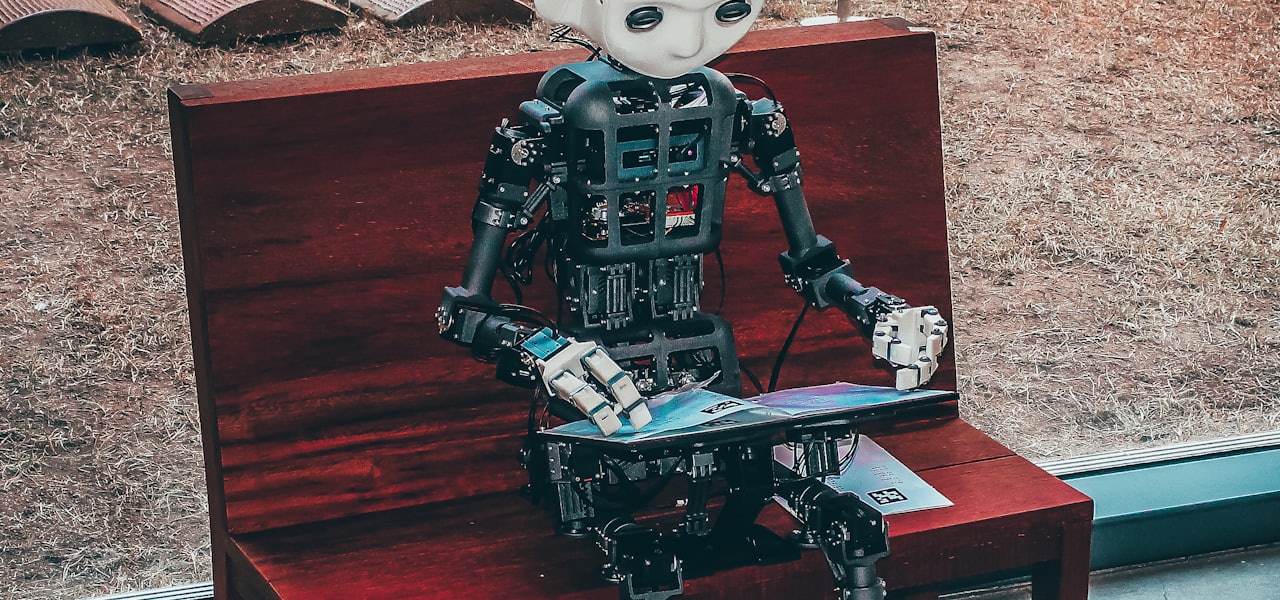
    Foveated rendering is a rendering technique which uses an eye tracker integrated with a virtual reality headset to reduce the rendering workload by greatly reducing the image quality in the peripheral vision (outside of the zone gazed by the fovea). A less sophisticated variant called fixed foveated rendering doesn't utilise eye tracking and instead assumes a fixed focal point. == History == Research into foveated rendering dates back at least to 1991. At Tech Crunch Disrupt SF 2014, Fove unveiled a headset featuring foveated rendering. This was followed by a successful kickstarter in May 2015. At CES 2016, SensoMotoric Instruments (SMI) demoed a new 250 Hz eye tracking system and a working foveated rendering solution. It resulted from a partnership with camera sensor manufacturer Omnivision who provided the camera hardware for the new system. In July 2016, Nvidia demonstrated during SIGGRAPH a new method of foveated rendering claimed to be invisible to users. In February 2017, Qualcomm announced their Snapdragon 835 Virtual Reality Development Kit (VRDK) which includes foveated rendering support called Adreno Foveation. == Use == According to chief scientist Michael Abrash at Oculus, utilising foveated rendering in conjunction with sparse rendering and deep learning image reconstruction has the potential to require an order of magnitude fewer pixels to be rendered in comparison to a full image. Later, these results have been demonstrated and published. In December 2019, fixed foveated rendering support was added to the Oculus Quest SDK. A number of VR headsets have included on-board eye tracking to provide support for foveated rendering, including HTC's Vive Pro Eye (2019), Meta Quest Pro (2022), PlayStation VR2 (2023), and Apple Vision Pro (2024). In 2025, Valve announced the upcoming Steam Frame headset, which applies a variation of the technique known as "foveated streaming" for wireless streaming from a PC to the headset; the method similarly uses variance in bit rate, and is performed at the encoder level rather than the software level.

    Read more →
  • GeneTalk

    GeneTalk

    GeneTalk is a web-based platform, tool, and database for filtering, reduction and prioritization of human sequence variants from next-generation sequencing (NGS) data. GeneTalk allows editing annotation about sequence variants and build up a crowd sourced database with clinically relevant information for diagnostics of genetic disorders. GeneTalk allows searching for information about specific sequence variants and connects to experts on variants that are potentially disease-relevant. == Application to diagnostics == Users can upload NGS data in Variant Call Format (VCF) onto the GeneTalk server into their accounts. All entries of the file are preprocessed and shown in the integrated VCF viewer. Filtering tools are set by the user to reduce the number of clinically non-relevant variants. After filtering and prioritization users can interpret relevant variants by retrieving information (annotations) about variants from the GeneTalk database. The communication platform allow users to contact experts about specific variants, genes, or genetic disorders, to exchange knowledge and expertise. === Analysis procedure === Steps required to analyze VCF files Upload VCF file Edit pedigree and phenotype information for segregation filtering Filter VCF file by editing the filtering options View results and annotations Add annotations === Filtering tools === The following filtering options may be used to reduce the non-relevant sequence variants in VCF files. Functional – filter out variants that have effects on protein level Linkage – filter out variants that are on specified chromosomes Gene panel – filter variants by genes or gene panels, subscribe to publicly available gene panels or create own ones Frequency – show only variants with a genotype frequency lower than specified Inheritance – filter out variants by presumed mode of inheritance Annotation – show only variants with a score for medical relevance and scientific evidence == Communication platform and expert network == Users can share VCF files with colleagues and coworkers. The integrated mailing systems allows users to contact experts easily. Users can create annotations and comments and rate annotations regarding medical relevance and scientific evidence, that is helpful for the community of users for diagnosis of genetic disorders. Registered users provide information about their field of knowledge in their profile and can be contacted by other users. == Potential applications == Developing diagnostics Genetic analysis Capturing data generated by community Communication and exchange of knowledge and expertise

    Read more →
  • Screenpal

    Screenpal

    ScreenPal (formerly known as Screencast-O-Matic) is cross-platform screen capture and screen recording software originally developed in 2006. == History == The company was founded by AJ Gregory in 2006 as Screencast-O-Matic. The software includes features for screen recording, screenshot capture, video editing, image editing, and a video and image hosting service. It is available for Windows and Mac operating systems, and has mobile apps for iOS and Android. The company launched a video editor in 2015. It began offering free video and image hosting in 2019, with premium hosting options for subscribers. In 2023, it was rebranded as ScreenPal.

    Read more →
  • Model-based clustering

    Model-based clustering

    In statistics, cluster analysis is the algorithmic grouping of objects into homogeneous groups based on numerical measurements. Model-based clustering based on a statistical model for the data, usually a mixture model. This has several advantages, including a principled statistical basis for clustering, and ways to choose the number of clusters, to choose the best clustering model, to assess the uncertainty of the clustering, and to identify outliers that do not belong to any group. == Model-based clustering == Suppose that for each of n {\displaystyle n} observations we have data on d {\displaystyle d} variables, denoted by y i = ( y i , 1 , … , y i , d ) {\displaystyle y_{i}=(y_{i,1},\ldots ,y_{i,d})} for observation i {\displaystyle i} . Then model-based clustering expresses the probability density function of y i {\displaystyle y_{i}} as a finite mixture, or weighted average of G {\displaystyle G} component probability density functions: p ( y i ) = ∑ g = 1 G τ g f g ( y i ∣ θ g ) , {\displaystyle p(y_{i})=\sum _{g=1}^{G}\tau _{g}f_{g}(y_{i}\mid \theta _{g}),} where f g {\displaystyle f_{g}} is a probability density function with parameter θ g {\displaystyle \theta _{g}} , τ g {\displaystyle \tau _{g}} is the corresponding mixture probability where ∑ g = 1 G τ g = 1 {\displaystyle \sum _{g=1}^{G}\tau _{g}=1} . Then in its simplest form, model-based clustering views each component of the mixture model as a cluster, estimates the model parameters, and assigns each observation to cluster corresponding to its most likely mixture component. === Gaussian mixture model === The most common model for continuous data is that f g {\displaystyle f_{g}} is a multivariate normal distribution with mean vector μ g {\displaystyle \mu _{g}} and covariance matrix Σ g {\displaystyle \Sigma _{g}} , so that θ g = ( μ g , Σ g ) {\displaystyle \theta _{g}=(\mu _{g},\Sigma _{g})} . This defines a Gaussian mixture model. The parameters of the model, τ g {\displaystyle \tau _{g}} and θ g {\displaystyle \theta _{g}} for g = 1 , … , G {\displaystyle g=1,\ldots ,G} , are typically estimated by maximum likelihood estimation using the expectation-maximization algorithm (EM); see also EM algorithm and GMM model. Bayesian inference is also often used for inference about finite mixture models. The Bayesian approach also allows for the case where the number of components, G {\displaystyle G} , is infinite, using a Dirichlet process prior, yielding a Dirichlet process mixture model for clustering. === Choosing the number of clusters === An advantage of model-based clustering is that it provides statistically principled ways to choose the number of clusters. Each different choice of the number of groups G {\displaystyle G} corresponds to a different mixture model. Then standard statistical model selection criteria such as the Bayesian information criterion (BIC) can be used to choose G {\displaystyle G} . The integrated completed likelihood (ICL) is a different criterion designed to choose the number of clusters rather than the number of mixture components in the model; these will often be different if highly non-Gaussian clusters are present. === Parsimonious Gaussian mixture model === For data with high dimension, d {\displaystyle d} , using a full covariance matrix for each mixture component requires estimation of many parameters, which can result in a loss of precision, generalizabity and interpretability. Thus it is common to use more parsimonious component covariance matrices exploiting their geometric interpretation. Gaussian clusters are ellipsoidal, with their volume, shape and orientation determined by the covariance matrix. Consider the eigendecomposition of a matrix Σ g = λ g D g A g D g T , {\displaystyle \Sigma _{g}=\lambda _{g}D_{g}A_{g}D_{g}^{T},} where D g {\displaystyle D_{g}} is the matrix of eigenvectors of Σ g {\displaystyle \Sigma _{g}} , A g = diag { A 1 , g , … , A d , g } {\displaystyle A_{g}={\mbox{diag}}\{A_{1,g},\ldots ,A_{d,g}\}} is a diagonal matrix whose elements are proportional to the eigenvalues of Σ g {\displaystyle \Sigma _{g}} in descending order, and λ g {\displaystyle \lambda _{g}} is the associated constant of proportionality. Then λ g {\displaystyle \lambda _{g}} controls the volume of the ellipsoid, A g {\displaystyle A_{g}} its shape, and D g {\displaystyle D_{g}} its orientation. Each of the volume, shape and orientation of the clusters can be constrained to be equal (E) or allowed to vary (V); the orientation can also be spherical, with identical eigenvalues (I). This yields 14 possible clustering models, shown in this table: It can be seen that many of these models are more parsimonious, with far fewer parameters than the unconstrained model that has 90 parameters when G = 4 {\displaystyle G=4} and d = 9 {\displaystyle d=9} . Several of these models correspond to well-known heuristic clustering methods. For example, k-means clustering is equivalent to estimation of the EII clustering model using the classification EM algorithm. The Bayesian information criterion (BIC) can be used to choose the best clustering model as well as the number of clusters. It can also be used as the basis for a method to choose the variables in the clustering model, eliminating variables that are not useful for clustering. Different Gaussian model-based clustering methods have been developed with an eye to handling high-dimensional data. These include the pgmm method, which is based on the mixture of factor analyzers model, and the HDclassif method, based on the idea of subspace clustering. The mixture-of-experts framework extends model-based clustering to include covariates. == Example == We illustrate the method with a dateset consisting of three measurements (glucose, insulin, sspg) on 145 subjects for the purpose of diagnosing diabetes and the type of diabetes present. The subjects were clinically classified into three groups: normal, chemical diabetes and overt diabetes, but we use this information only for evaluating clustering methods, not for classifying subjects. The BIC plot shows the BIC values for each combination of the number of clusters, G {\displaystyle G} , and the clustering model from the Table. Each curve corresponds to a different clustering model. The BIC favors 3 groups, which corresponds to the clinical assessment. It also favors the unconstrained covariance model, VVV. This fits the data well, because the normal patients have low values of both sspg and insulin, while the distributions of the chemical and overt diabetes groups are elongated, but in different directions. Thus the volumes, shapes and orientations of the three groups are clearly different, and so the unconstrained model is appropriate, as selected by the model-based clustering method. The classification plot shows the classification of the subjects by model-based clustering. The classification was quite accurate, with a 12% error rate as defined by the clinical classification. Other well-known clustering methods performed worse with higher error rates, such as single-linkage clustering with 46%, average link clustering with 30%, complete-linkage clustering also with 30%, and k-means clustering with 28%. == Outliers in clustering == An outlier in clustering is a data point that does not belong to any of the clusters. One way of modeling outliers in model-based clustering is to include an additional mixture component that is very dispersed, with for example a uniform distribution. Another approach is to replace the multivariate normal densities by t {\displaystyle t} -distributions, with the idea that the long tails of the t {\displaystyle t} -distribution would ensure robustness to outliers. However, this is not breakdown-robust. A third approach is the "tclust" or data trimming approach which excludes observations identified as outliers when estimating the model parameters. == Non-Gaussian clusters and merging == Sometimes one or more clusters deviate strongly from the Gaussian assumption. If a Gaussian mixture is fitted to such data, a strongly non-Gaussian cluster will often be represented by several mixture components rather than a single one. In that case, cluster merging can be used to find a better clustering. A different approach is to use mixtures of complex component densities to represent non-Gaussian clusters. == Non-continuous data == === Categorical data === Clustering multivariate categorical data is most often done using the latent class model. This assumes that the data arise from a finite mixture model, where within each cluster the variables are independent. === Mixed data === These arise when variables are of different types, such as continuous, categorical or ordinal data. A latent class model for mixed data assumes local independence between the variable. The location model relaxes the local independence assumption. The clustMD approach assumes that the observed variables are manifestations of underlying continuous Gaussian latent

    Read more →
  • Software construction

    Software construction

    Software construction is the process of creating working software via coding and integration. The process includes unit and integration testing although does not include higher level testing such as system testing. Construction is an aspect of the software development lifecycle and is integrated in the various software development process models with varying focus on construction as an activity separate from other activities. In the waterfall model, a software development effort consists of sequential phases including requirements analysis, design, and planning which are prerequisites for starting construction. In an iterative model such as scrum, evolutionary prototyping, or extreme programming, construction as an activity that occurs concurrently or overlapping other activities. Construction planning may include defining the order in which components are created and integrated, the software quality management processes, and the allocation of tasks to teams and developers. To facilitate project management, numerous construction aspects can be measured; these include the amount of code developed, modified, reused, and destroyed, code complexity, code inspection statistics, faults-fixed and faults-found rates, and effort expended. These measurements can be useful for aspects such as ensuring quality and improving the process. == Activities == Construction includes many activities. === Coding === The following are a few of the key aspects of the coding activity: Naming Choice of name for each identifier. One study showed that the effort required to debug a program is minimized when variable names are between 10 and 16 characters. Logic Organization into statements and routines Highly cohesive routines proved to be less error prone than routines with lower cohesion. A study of 450 routines found that 50 percent of the highly cohesive routines were fault free compared to only 18 percent of routines with low cohesion. Another study of a different 450 routines found that routines with the highest coupling-to-cohesion ratios had 7 times as many errors as those with the lowest coupling-to-cohesion ratios and were 20 times as costly to fix. Although studies showed inconclusive results regarding the correlation between routine sizes and the rate of errors in them, but one study found that routines with fewer than 143 lines of code were 2.4 times less expensive to fix than larger routines. Another study showed that the code needed to be changed least when routines averaged 100 to 150 lines of code. Another study found that structural complexity and amount of data in a routine were correlated with errors regardless of its size. Interfaces between routines are some of the most error-prone areas of a program. One study showed that 39 percent of all errors were errors in communication between routines. Unused parameters are correlated with an increased error rate. In one study, only 17 to 29 percent of routines with more than one unreferenced variable had no errors, compared to 46 percent in routines with no unused variables. The number of parameters of a routine should be 7 at maximum as research has found that people generally cannot keep track of more than about seven chunks of information at once. One experiment showed that designs which access arrays sequentially, rather than randomly, result in fewer variables and fewer variable references. One experiment found that loops-with-exit are more comprehensible than other kinds of loops. Regarding the level of nesting in loops and conditionals, studies have shown that programmers have difficulty comprehending more than three levels of nesting. Control flow complexity has been shown to correlate with low reliability and frequent errors. Modularity Structuring and refactoring the code into classes, packages and other structures. When considering containment, the maximum number of data members in a class shouldn't exceed 7±2. Research has shown that this number is the number of discrete items a person can remember while performing other tasks. When considering inheritance, the number of levels in the inheritance tree should be limited. Deep inheritance trees have been found to be significantly associated with increased fault rates. When considering the number of routines in a class, it should be kept as small as possible. A study on C++ programs has found an association between the number of routines and the number of faults. A study by NASA showed that the putting the code into well-factored classes can double the code reusability compared to the code developed using functional design. Error handling Encoding logic to handle both planned and unplanned errors and exceptions. Resource management Managing computational resource use via exclusion mechanisms and discipline in accessing serially reusable resources, including threads or database locks. Security Prevention of code-level security breaches such as buffer overrun and array index overflow. Optimization Optimization while avoiding premature optimization. Documentation Both embedded in the code as comments and as external documents. === Integration === Integration is about combining separately constructed parts. Concerns include planning the sequence in which components will be integrated, creating scaffolding to support interim versions of the software, determining the degree of testing and quality work performed on components before they are integrated, and determining points in the project at which interim versions are tested. === Testing === Testing can reduce the time between when faulty logic is inserted in the code and when it is detected. In some cases, testing is performed after code has been written, but in test-first programming, test cases are created before code is written. Construction includes at least two forms of testing, often performed by the developer who wrote the code: unit testing and integration testing. === Reuse === Software reuse entails more than creating and using libraries. It requires formalizing the practice of reuse by integrating reuse processes and activities into the software life cycle. The tasks related to reuse in software construction during coding and testing may include: selection of the reusable code, evaluation of code or test re-usability, reporting reuse metrics. === Quality assurance === Techniques for ensuring quality as software is constructed include: Testing One study found that the average defect detection rates of Unit testing and integration testing are 30% and 35% respectively. Software inspection With respect to software inspection, one study found that the average defect detection rate of formal code inspections is 60%. Regarding the cost of finding defects, a study found that code reading detected 80% more faults per hour than testing. Another study shown that it costs six times more to detect design defects by using testing than by using inspections. A study by IBM showed that only 3.5 hours were needed to find a defect through code inspections versus 15–25 hours through testing. Microsoft has found that it takes 3 hours to find and fix a defect by using code inspections and 12 hours to find and fix a defect by using testing. In a 700 thousand lines program, it was reported that code reviews were several times as cost-effective as testing. Studies found that inspections result in 20% - 30% fewer defects per 1000 lines of code than less formal review practices and that they increase productivity by about 20%. Formal inspections will usually take 10% - 15% of the project budget and will reduce overall project cost. Researchers found that having more than 2 - 3 reviewers on a formal inspection doesn't increase the number of defects found, although the results seem to vary depending on the kind of material being inspected. Technical review With respect to technical review, one study found that the average defect detection rates of informal code reviews and desk checking are 25% and 40% respectively. Walkthroughs were found to have a defect detection rate of 20% - 40%, but were found also to be expensive especially when project pressures increase. Code reading was found by NASA to detect 3.3 defects per hour of effort versus 1.8 defects per hour for testing. It also finds 20% - 60% more errors over the life of the project than different kinds of testing. A study of 13 reviews about review meetings, found that 90% of the defects were found in preparation for the review meeting while only around 10% were found during the meeting. Static analysis With respect to Static analysis (IEEE1028), studies have shown that a combination of these techniques needs to be used to achieve a high defect detection rate. Other studies showed that different people tend to find different defects. One study found that the extreme programming practices of pair programming, desk checking, unit testing, integration testing, and regression testing can achieve a 90% defect detection rate. An experiment involving exper

    Read more →