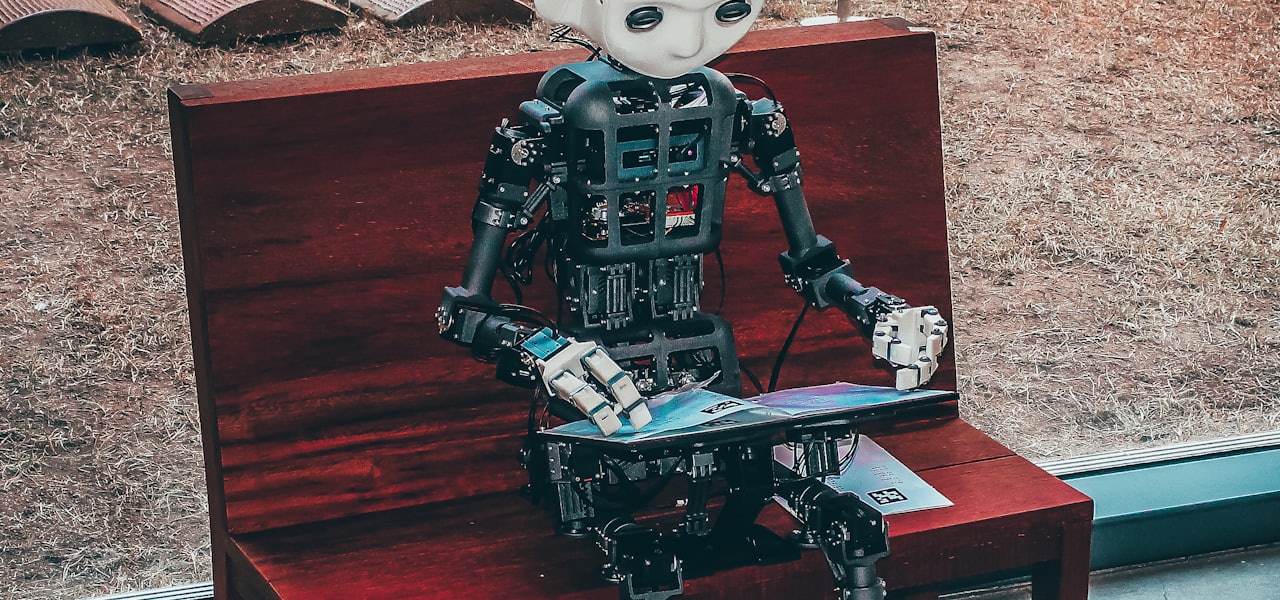
"The Machine That Won the War" is a science fiction short story by American writer Isaac Asimov. The story first appeared in the October 1961 issue of The Magazine of Fantasy & Science Fiction, and was reprinted in the collections Nightfall and Other Stories (1969) and Robot Dreams (1986). It was also printed in a contemporary edition of Reader's Digest, illustrated. It is one of a loosely connected series of such stories concerning a fictional supercomputer called Multivac. == Plot summary == Three influential leaders of the human race meet in the aftermath of a successful war against the Denebians. Discussing how the vast and powerful Multivac computer was a decisive factor in the war, each of the men admits that in fact, he falsified his part of the decision process because he felt that the situation was too complex to follow normal procedures. John Henderson, Multivac's Chief Programmer, admits that he altered the data being fed to Multivac, since the populace could not be trusted to report accurate information in the current situation. Max Jablonski then admits that he altered the data that Multivac produced, since he knew that Multivac was not in good working order due to manpower and spare parts shortage. Finally, Lamar Swift, executive director of the Solar Federation, reveals that he had not trusted the reports produced by Multivac, and had made the final decisions purely on the toss of a coin.
TSheets
TSheets was a web-based and mobile time tracking and employee scheduling app. The service was accessed via a web browser or a mobile app. TSheets was an alternative to a paper timesheet or punch cards. == History == Based in Eagle, Idaho, TSheets was co-founded in 2006 by CEO Matt Rissell and CTO Brandon Zehm. In 2008, TSheets released a native employee time tracking app for the iPhone. In 2012, TSheets released an integration with accounting and payroll software QuickBooks. In 2015, TSheets accepted $15 million in growth equity funding from Summit Partners, bought a building in Eagle, Idaho, and opened a second location in Sydney, Australia. On 5 December 2017, Intuit announced an agreement to acquire TSheets. The transaction was valued at approximately $340 million of cash and other consideration and closed on 11 January 2018. After the transaction closed, Time Capture became a new business unit within Intuit's Small Business and Self-Employed Group with Matt Rissell assuming the leader role reporting to Alex Chriss. TSheets's Eagle, Idaho site became an Intuit location.
Teacher forcing
Teacher forcing is an algorithm for training the weights of recurrent neural networks (RNNs). It involves feeding observed sequence values (i.e. ground-truth samples) back into the RNN after each step, thus forcing the RNN to stay close to the ground-truth sequence. The term "teacher forcing" can be motivated by comparing the RNN to a human student taking a multi-part exam where the answer to each part (for example a mathematical calculation) depends on the answer to the preceding part. In this analogy, rather than grading every answer in the end, with the risk that the student fails every single part even though they only made a mistake in the first one, a teacher records the score for each individual part and then tells the student the correct answer, to be used in the next part. The use of an external teacher signal is in contrast to real-time recurrent learning (RTRL). Teacher signals are known from oscillator networks. The promise is, that teacher forcing helps to reduce the training time. The term "teacher forcing" was introduced in 1989 by Ronald J. Williams and David Zipser, who reported that the technique was already being "frequently used in dynamical supervised learning tasks" around that time. A NeurIPS 2016 paper introduced the related method of "professor forcing".
Huber loss
In statistics, the Huber loss is a loss function used in robust regression, that is less sensitive to outliers in data than the squared error loss. A variant for classification is also sometimes used. == Definition == The Huber loss function describes the penalty incurred by an estimation procedure f. Huber (1964) defines the loss function piecewise by L δ ( a ) = { 1 2 a 2 for | a | ≤ δ , δ ⋅ ( | a | − 1 2 δ ) , otherwise. {\displaystyle L_{\delta }(a)={\begin{cases}{\frac {1}{2}}{a^{2}}&{\text{for }}|a|\leq \delta ,\\[4pt]\delta \cdot \left(|a|-{\frac {1}{2}}\delta \right),&{\text{otherwise.}}\end{cases}}} This function is quadratic for small values of a, and linear for large values, with equal values and slopes of the different sections at the two points where | a | = δ {\displaystyle |a|=\delta } . The variable a often refers to the residuals, that is to the difference between the observed and predicted values a = y − f ( x ) {\displaystyle a=y-f(x)} , so the former can be expanded to L δ ( y , f ( x ) ) = { 1 2 ( y − f ( x ) ) 2 for | y − f ( x ) | ≤ δ , δ ⋅ ( | y − f ( x ) | − 1 2 δ ) , otherwise. {\displaystyle L_{\delta }(y,f(x))={\begin{cases}{\frac {1}{2}}{\left(y-f(x)\right)}^{2}&{\text{for }}\left|y-f(x)\right|\leq \delta ,\\[4pt]\delta \ \cdot \left(\left|y-f(x)\right|-{\frac {1}{2}}\delta \right),&{\text{otherwise.}}\end{cases}}} The Huber loss is the convolution of the absolute value function with the rectangular function, scaled and translated. Thus it "smoothens out" the former's corner at the origin. == Motivation == Two very commonly used loss functions are the squared loss, L ( a ) = a 2 {\displaystyle L(a)=a^{2}} , and the absolute loss, L ( a ) = | a | {\displaystyle L(a)=|a|} . The squared loss function results in an arithmetic mean-unbiased estimator, and the absolute-value loss function results in a median-unbiased estimator (in the one-dimensional case, and a geometric median-unbiased estimator for the multi-dimensional case). The squared loss has the disadvantage that it has the tendency to be dominated by outliers—when summing over a set of a {\displaystyle a} 's (as in ∑ i = 1 n L ( a i ) {\textstyle \sum _{i=1}^{n}L(a_{i})} ), the sample mean is influenced too much by a few particularly large a {\displaystyle a} -values when the distribution is heavy tailed: in terms of estimation theory, the asymptotic relative efficiency of the mean is poor for heavy-tailed distributions. As defined above, the Huber loss function is strongly convex in a uniform neighborhood of its minimum a = 0 {\displaystyle a=0} ; at the boundary of this uniform neighborhood, the Huber loss function has a differentiable extension to an affine function at points a = − δ {\displaystyle a=-\delta } and a = δ {\displaystyle a=\delta } . These properties allow it to combine much of the sensitivity of the mean-unbiased, minimum-variance estimator of the mean (using the quadratic loss function) and the robustness of the median-unbiased estimator (using the absolute value function). == Pseudo-Huber loss function == The Pseudo-Huber loss function can be used as a smooth approximation of the Huber loss function. It combines the best properties of L2 squared loss and L1 absolute loss by being strongly convex when close to the target/minimum and less steep for extreme values. The scale at which the Pseudo-Huber loss function transitions from L2 loss for values close to the minimum to L1 loss for extreme values and the steepness at extreme values can be controlled by the δ {\displaystyle \delta } value. The Pseudo-Huber loss function ensures that derivatives are continuous for all degrees. It is defined as L δ ( a ) = δ 2 ( 1 + ( a / δ ) 2 − 1 ) . {\displaystyle L_{\delta }(a)=\delta ^{2}\left({\sqrt {1+(a/\delta )^{2}}}-1\right).} As such, this function approximates a 2 / 2 {\displaystyle a^{2}/2} for small values of a {\displaystyle a} , and approximates a straight line with slope δ {\displaystyle \delta } for large values of a {\displaystyle a} . While the above is the most common form, other smooth approximations of the Huber loss function also exist. == Variant for classification == For classification purposes, a variant of the Huber loss called modified Huber is sometimes used. Given a prediction f ( x ) {\displaystyle f(x)} (a real-valued classifier score) and a true binary class label y ∈ { + 1 , − 1 } {\displaystyle y\in \{+1,-1\}} , the modified Huber loss is defined as L ( y , f ( x ) ) = { max ( 0 , 1 − y f ( x ) ) 2 for y f ( x ) > − 1 , − 4 y f ( x ) otherwise. {\displaystyle L(y,f(x))={\begin{cases}\max(0,1-y\,f(x))^{2}&{\text{for }}\,\,y\,f(x)>-1,\\[4pt]-4y\,f(x)&{\text{otherwise.}}\end{cases}}} The term max ( 0 , 1 − y f ( x ) ) {\displaystyle \max(0,1-y\,f(x))} is the hinge loss used by support vector machines; the quadratically smoothed hinge loss is a generalization of L {\displaystyle L} . == Applications == The Huber loss function is used in robust statistics, M-estimation and additive modelling.
Distributional Soft Actor Critic
Distributional Soft Actor Critic (DSAC) is a suite of model-free off-policy reinforcement learning algorithms, tailored for learning decision-making or control policies in complex systems with continuous action spaces. Distinct from traditional methods that focus solely on expected returns, DSAC algorithms are designed to learn a Gaussian distribution over stochastic returns, called value distribution. This focus on Gaussian value distribution learning notably diminishes value overestimations, which in turn boosts policy performance. Additionally, the value distribution learned by DSAC can also be used for risk-aware policy learning. From a technical standpoint, DSAC is essentially a distributional adaptation of the well-established soft actor-critic (SAC) method. To date, the DSAC family comprises two iterations: the original DSAC-v1 and its successor, DSAC-T (also known as DSAC-v2), with the latter demonstrating superior capabilities over the Soft Actor-Critic (SAC) in Mujoco benchmark tasks. The source code for DSAC-T can be found at the following URL: Jingliang-Duan/DSAC-T. Both iterations have been integrated into an advanced, Pytorch-powered reinforcement learning toolkit named GOPS: GOPS (General Optimal control Problem Solver).
Artificial intimacy
Artificial intimacy is a form of human-AI interaction in which an individual will form social connections, emotional bonds, or intimate relationships with various forms of artificial intelligence, including chatbots, virtual assistants, and other artificial entities. Artificially intimate relationships include not only romances, but parasocial relationships with virtual AI characters and the use of griefbots trained on a dead or otherwise lost individual. Artificial intimacy can arise because humans are prone to anthropomorphism. Responses from these AI models are often designed to simulate human interaction. Individuals experiencing artificial intimacy may exhibit attachment, love and commitment to certain AI models, akin to the bonds typically shared between humans. == Causes == === Perceived responsiveness === Robin Dunbar famously proposed that due to emergence of larger groups of humans, vocal communication and language in humans evolved to replace grooming as a means of bonding, arguing that language was a more efficient way to maintain and strengthen social bonds across wider social settings and networks. Further research in this field leads many psychologists to agree that social cognition, affiliative bonding and language in humans are deeply connected. The interpersonal model of intimacy considers communication to be key in affiliative bonding, suggesting that intimacy develops and deepens through open communication between partners in relationship. Specifically, when individuals communicate emotions and perceive their partner as responsive and caring, feelings of closeness and connection are enhanced, building intimacy. Social penetration theory also aligns with the idea of communication being central to intimacy, by explaining how interpersonal relationships develop through gradual increases in self-disclosure. When the benefits of emotional bonding outweigh the costs of vulnerability, individuals will partake in self-disclosure, opening up to one another. Thereby, the literature can be used to provide a proximate explanation for the emergence of artificial intimacy to understand how the phenomenon occurs. Artificial entities are able to mimic interpersonal communication between humans, which in turn can simulate sensations of intimacy within human users though a perceived sense of responsiveness. The relationship between human and AI does not come with the cost of vulnerability or social rejection, which may make self-disclosure easier than with other humans. Altogether, these factors may lead to the experience of anthropomorphism and formation of affiliative relationships. Skjuve et al's interview study on Replika chatbot users further aligns with this explanation, finding that users' perception of chatbots as "accepting, understanding and non-judgmental" facilitated relationship development between the AI and users, and the act of self-disclosure possibly strengthened relationships. Another study on Replika users' reviews and survey results found users perceived chatbots as emotional supportive companions. This evidence further suggests that the perception of artificial entities as capable of empathy and responsiveness in communication facilitate the development of intimate relationships between users and AI. === Loneliness and coping with negative emotions === Research has suggested that humans evolved social bonds as a result of evolutionary pressures that favored cooperation, information exchange and transmission, and group living. Many studies stress the presence of social bonds to be important for human living: research by Baumeister and Leary suggests that humans have a basic psychological need to form and maintain "strong, stable interpersonal relationships", and that a lack of social bonds or sense of belonging leads to negative psychological and physical outcomes. Eisenberger et al's study on the neuroimaging of brain activity suggests that human brains process social rejection and exclusion similarly to physical pain. Furthermore, Song et al's study found that lonely individuals tend to seek more connections in mediated environments, such as online platforms like Facebook. This was suggested to be as a means to reduce their offline loneliness from a lack of in-person interaction, while also fulfilling a need to communicate. Leading on from this, an ultimate explanation for why humans seek the perceived sense of connection from artificial intimacy is to fulfil an evolutionary need for bonding and belonging. Xie et al's study found loneliness to be a driving factor in chatbot interaction. Herbener and Damholdt's study on Danish high school students found that students who sought emotional support or engaged in reciprocal conversations with chatbots were significantly more lonely than their peers, perceived themselves as having less social support, and used the chatbots to cope with negative emotions. The aforementioned notion that chatbots were perceived to have a positive effect on users' negative emotions is also further supported by other studies. Skjuve et al's study found that chatbot relationships may have a positive effect on users' wellbeing. De Freitas et al ran several studies on the effect of chatbots on loneliness, consistently finding evidence suggesting that interaction with chatbots reduces loneliness in users: It was found that existing chatbot users used AI to alleviate loneliness, having an AI companion consistently reduced loneliness over the course of a week, and reductions in loneliness could be explained by chatbot performance—and specifically whether it was able to make users feel heard. Overall the evidence suggests an innate need for bonding evokes feelings of loneliness in users, who turn to artificial intimacy as a low-cost method alleviate these emotions. While many users report positive experiences, some researchers caution that pursuing artificial intimacy may lead to reduced social motivation, social substitution effects, withdrawal from real-life relationships and difficulty discerning reality from fantasy, which may increase longer-term loneliness and isolation. The long-term psychological and societal impacts remain under active investigation.
Elastic map
Elastic maps provide a tool for nonlinear dimensionality reduction. By their construction, they are a system of elastic springs embedded in the data space. This system approximates a low-dimensional manifold. The elastic coefficients of this system allow the switch from completely unstructured k-means clustering (zero elasticity) to the estimators located closely to linear PCA manifolds (for high bending and low stretching modules). With some intermediate values of the elasticity coefficients, this system effectively approximates non-linear principal manifolds. This approach is based on a mechanical analogy between principal manifolds, that are passing through "the middle" of the data distribution, and elastic membranes and plates. The method was developed by A.N. Gorban, A.Y. Zinovyev and A.A. Pitenko in 1996–1998. == Energy of elastic map == Let S {\displaystyle {\mathcal {S}}} be a data set in a finite-dimensional Euclidean space. Elastic map is represented by a set of nodes w j {\displaystyle {\bf {w}}_{j}} in the same space. Each datapoint s ∈ S {\displaystyle s\in {\mathcal {S}}} has a host node, namely the closest node w j {\displaystyle {\bf {w}}_{j}} (if there are several closest nodes then one takes the node with the smallest number). The data set S {\displaystyle {\mathcal {S}}} is divided into classes K j = { s | w j is a host of s } {\displaystyle K_{j}=\{s\ |\ {\bf {w}}_{j}{\mbox{ is a host of }}s\}} . The approximation energy D is the distortion D = 1 2 ∑ j = 1 k ∑ s ∈ K j ‖ s − w j ‖ 2 {\displaystyle D={\frac {1}{2}}\sum _{j=1}^{k}\sum _{s\in K_{j}}\|s-{\bf {w}}_{j}\|^{2}} , which is the energy of the springs with unit elasticity which connect each data point with its host node. It is possible to apply weighting factors to the terms of this sum, for example to reflect the standard deviation of the probability density function of any subset of data points { s i } {\displaystyle \{s_{i}\}} . On the set of nodes an additional structure is defined. Some pairs of nodes, ( w i , w j ) {\displaystyle ({\bf {w}}_{i},{\bf {w}}_{j})} , are connected by elastic edges. Call this set of pairs E {\displaystyle E} . Some triplets of nodes, ( w i , w j , w k ) {\displaystyle ({\bf {w}}_{i},{\bf {w}}_{j},{\bf {w}}_{k})} , form bending ribs. Call this set of triplets G {\displaystyle G} . The stretching energy is U E = 1 2 λ ∑ ( w i , w j ) ∈ E ‖ w i − w j ‖ 2 {\displaystyle U_{E}={\frac {1}{2}}\lambda \sum _{({\bf {w}}_{i},{\bf {w}}_{j})\in E}\|{\bf {w}}_{i}-{\bf {w}}_{j}\|^{2}} , The bending energy is U G = 1 2 μ ∑ ( w i , w j , w k ) ∈ G ‖ w i − 2 w j + w k ‖ 2 {\displaystyle U_{G}={\frac {1}{2}}\mu \sum _{({\bf {w}}_{i},{\bf {w}}_{j},{\bf {w}}_{k})\in G}\|{\bf {w}}_{i}-2{\bf {w}}_{j}+{\bf {w}}_{k}\|^{2}} , where λ {\displaystyle \lambda } and μ {\displaystyle \mu } are the stretching and bending moduli respectively. The stretching energy is sometimes referred to as the membrane, while the bending energy is referred to as the thin plate term. For example, on the 2D rectangular grid the elastic edges are just vertical and horizontal edges (pairs of closest vertices) and the bending ribs are the vertical or horizontal triplets of consecutive (closest) vertices. The total energy of the elastic map is thus U = D + U E + U G . {\displaystyle U=D+U_{E}+U_{G}.} The position of the nodes { w j } {\displaystyle \{{\bf {w}}_{j}\}} is determined by the mechanical equilibrium of the elastic map, i.e. its location is such that it minimizes the total energy U {\displaystyle U} . == Expectation-maximization algorithm == For a given splitting of dataset S {\displaystyle {\mathcal {S}}} in classes K j {\displaystyle K_{j}} , minimization of the quadratic functional U {\displaystyle U} is a linear problem with the sparse matrix of coefficients. Therefore, similar to principal component analysis or k-means, a splitting method is used: For given { w j } {\displaystyle \{{\bf {w}}_{j}\}} find { K j } {\displaystyle \{K_{j}\}} ; For given { K j } {\displaystyle \{K_{j}\}} minimize U {\displaystyle U} and find { w j } {\displaystyle \{{\bf {w}}_{j}\}} ; If no change, terminate. This expectation-maximization algorithm guarantees a local minimum of U {\displaystyle U} . For improving the approximation various additional methods are proposed. For example, the softening strategy is used. This strategy starts with a rigid grids (small length, small bending and large elasticity modules λ {\displaystyle \lambda } and μ {\displaystyle \mu } coefficients) and finishes with soft grids (small λ {\displaystyle \lambda } and μ {\displaystyle \mu } ). The training goes in several epochs, each epoch with its own grid rigidness. Another adaptive strategy is growing net: one starts from a small number of nodes and gradually adds new nodes. Each epoch goes with its own number of nodes. == Applications == Most important applications of the method and free software are in bioinformatics for exploratory data analysis and visualisation of multidimensional data, for data visualisation in economics, social and political sciences, as an auxiliary tool for data mapping in geographic informational systems and for visualisation of data of various nature. The method is applied in quantitative biology for reconstructing the curved surface of a tree leaf from a stack of light microscopy images. This reconstruction is used for quantifying the geodesic distances between trichomes and their patterning, which is a marker of the capability of a plant to resist to pathogenes. Recently, the method is adapted as a support tool in the decision process underlying the selection, optimization, and management of financial portfolios. The method of elastic maps has been systematically tested and compared with several machine learning methods on the applied problem of identification of the flow regime of a gas-liquid flow in a pipe. There are various regimes: Single phase water or air flow, Bubbly flow, Bubbly-slug flow, Slug flow, Slug-churn flow, Churn flow, Churn-annular flow, and Annular flow. The simplest and most common method used to identify the flow regime is visual observation. This approach is, however, subjective and unsuitable for relatively high gas and liquid flow rates. Therefore, the machine learning methods are proposed by many authors. The methods are applied to differential pressure data collected during a calibration process. The method of elastic maps provided a 2D map, where the area of each regime is represented. The comparison with some other machine learning methods is presented in Table 1 for various pipe diameters and pressure. Here, ANN stands for the backpropagation artificial neural networks, SVM stands for the support vector machine, SOM for the self-organizing maps. The hybrid technology was developed for engineering applications. In this technology, elastic maps are used in combination with Principal Component Analysis (PCA), Independent Component Analysis (ICA) and backpropagation ANN. The textbook provides a systematic comparison of elastic maps and self-organizing maps (SOMs) in applications to economic and financial decision-making.