Grokipedia is an AI-generated online encyclopedia operated by the American company xAI. The site was launched on October 27, 2025. Some entries are generated by Grok, a large language model owned by the same company, while others were forked from Wikipedia, with some altered and some used nearly verbatim. Articles cannot be directly edited, though logged-in visitors to the encyclopedia can suggest new articles or corrections via a pop-up form, which are reviewed by Grok. The xAI founder Elon Musk suggested Grokipedia could be an alternative to Wikipedia that would "purge out the propaganda" he believes is promoted by the latter, describing Wikipedia as "woke" and an "extension of legacy media propaganda". External analysis of Grokipedia's content has focused on its accuracy and biases due to hallucinations and potential algorithmic bias, which reviewers have described as promoting right-wing perspectives and Musk's views. The majority of coverage has described the website as validating, promoting, and legitimizing a variety of debunked conspiracy theories and ideas against scientific consensus on topics such as HIV/AIDS denialism, vaccines and autism, climate change, and race and intelligence. The site has been accused of whitewashing far-right extremism, such as by falsely claiming a white genocide is actively occurring. Several right-wing figures have welcomed the site. Studies have highlighted its use of sources deemed as having very low credibility such as X conversations and neo-Nazi websites, and for writing about far-right figures and topics in a promotional manner. == Background == Wikipedia is an online encyclopedia written and maintained by a community of volunteers. Its possible bias has been studied and debated. In 2018, Haaretz noted "Wikipedia has succeeded in being accused of being both too liberal and too conservative, and has critics from across the spectrum". xAI is an American AI company founded by Elon Musk in 2023. Its flagship product is the family of large language models called Grok. == History == In 2021, Musk expressed affection for Wikipedia on its 20th anniversary. In 2022, however, Musk argued that Wikipedia was "losing its objectivity", and in 2023, said he would donate US$1 billion to the project if it was pejoratively renamed "Dickipedia". In December 2024, Musk called for a boycott of donations to Wikipedia over its perceived left-wing bias, calling it "Wokepedia". In January 2025, Musk made a series of statements on Twitter denouncing Wikipedia for its description of the incident where he made a controversial gesture, which many viewed as resembling a Nazi salute, at president Donald Trump's second inauguration. Musk has since positioned Grokipedia as an alternative to Wikipedia that would "purge out the propaganda" in the latter, with Musk describing Wikipedia as "woke" and an "extension of legacy media propaganda". === Idea and announcement === In September 2025, Musk spoke at the All-In podcast conference with David O. Sacks, the White House advisor on AI and cryptocurrency, about how Grok consumed data from Wikipedia and other sources to gain more complete knowledge of the world. Sacks suggested publishing its knowledge base as an artifact called "Grokipedia", saying "Wikipedia is so biased, it's a constant war". Following the conversation, Musk announced that xAI was building a new AI-generated online encyclopedia called Grokipedia. According to Musk's announcement, it would be an AI-powered knowledge base designed to rival Wikipedia by addressing its perceived biases, errors, and ideological slants. The project positioned itself within a history of ideologically driven alternatives to Wikipedia, such as the conservative Conservapedia (launched in 2006) and the Russian-government-friendly Ruwiki (launched in 2023). However, Grokipedia is distinct in its core reliance on artificial intelligence rather than human community editing. === Launch and traffic === On October 6, 2025, Musk announced that the early version of Grokipedia was scheduled for release in two weeks, but the project was postponed briefly to address content quality issues. It launched on October 27, 2025, labeled "v 0.1", with over 800,000 articles, compared to over seven million English Wikipedia articles as of September 1, 2025. According to an initial analysis of usage figures by Similarweb, which evaluates data from registered users and partners, Grokipedia recorded a peak of over 460,000 website visits in the US on October 28, 2025. After that, traffic dropped significantly and settled at around 35,000 visits per day between November 8 and 11, 2025. As of early 2026, it had over 5.6 million articles. In January 2026, The Guardian reported that GPT-5.2 frequently cited Grokipedia as a source in responses, raising concerns of misinformation on ChatGPT. The same month, The Verge reported that Google's AI Overviews, AI Mode, and Gemini language model, as well as Microsoft Copilot and Perplexity AI, used Grokipedia to answer niche, obscure, or highly specific factual questions or "non-sensitive queries." According to a case study published by SEO Engico, the site received only 19 clicks from Google Search in November 2025 but reached approximately 3.2 million monthly clicks by January 2026, with over 900,000 pages indexed and millions of ranking keywords. Analysts attributed the surge in part to the site's technical structure and large-scale AI-generated content production. In early February 2026, Grokipedia's visibility in Google Search declined sharply. SEO analysts, including Glenn Gabe and Malte Landwehr, reported a significant drop in rankings across Google organic results as well as in Google AI Overviews and AI Mode. The same case study cited independent reviews that identified citation quality concerns, including references to low-credibility sources and instances of self-citation. By mid-February 2026, Grokipedia had reportedly lost much of its previous search visibility, and Wikipedia ranked above it for searches related to its own name. === Updates === ==== Future ==== In November 2025, Musk announced that he eventually plans to change the name of the site to Encyclopedia Galactica when Grokipedia is "good enough", saying that it had a "long way to go". This name is taken from the publication of that title in the works of Isaac Asimov and Douglas Adams. Musk said that he hoped to send copies of the encyclopedia to "the Moon and Mars and out to deep space". == Content == The Grok large language model generates and fact-checks articles on Grokipedia. Users cannot directly edit Grokipedia articles, but logged-in users can suggest edits and report errors, with such submissions being reviewed and implemented by the Grok AI. Some articles are nearly identical to their Wikipedia entries, but the format of Grokipedia citations is different, and some Grokipedia articles were republished almost verbatim, accompanied by a disclaimer noting that the content was "adapted from Wikipedia" under a Creative Commons license. Others were completely rewritten from scratch using Musk's AI chatbot, Grok. Forbes identified the articles AMD, Lamborghini, and PlayStation 5 as examples of copied Wikipedia articles. Articles attributed to Wikipedia carry a Creative Commons Attribution-ShareAlike license, while the license of other articles is licensed under the "X Community License", a license that accepts reuse and remixing for "non-commercial and research purposes" and commercial use that abides to "all of the guardrails provided in xAI's Acceptable Use Policy". On October 31, 2025, Musk clarified that the duplication of Wikipedia articles was intentional, saying that the Grokipedia team instructed Grok to compile Wikipedia's top 1 million articles and make content changes to them. The site's design has been described as minimalist with a simple homepage including little more than a large search bar. In a comparative textual analysis of the most heavily edited matched article pairs from Grokipedia and Wikipedia, Grokipedia entries are substantially longer and less densely referenced, indicating that AI-produced encyclopedias prioritize exposition rather than source-based validation. Starting in version 0.2, Grok reviews and implements approved suggested edits, and a small panel rotates through a display of the names of several recently edited articles. In February 2026, the Columbia Journalism Review reported on an analysis by the Tow Center for Digital Journalism finding that Grok, the AI behind Grokipedia, had increasingly begun suggesting and approving edits to the site itself without human involvement. According to the report, AI-generated edit suggestions overtook human submissions in December 2025 and accounted for more than three-quarters of proposed changes. The analysis raised concerns about transparency, editorial oversight, and fact-checking standards, particularly after instances in which Grok proposed or modified politically s
Web application firewall
A Web application firewall (WAF) is a specific form of application firewall that filters, monitors, and blocks HTTP traffic to and from a web service. By inspecting HTTP traffic, it can prevent attacks exploiting a Web application's known vulnerabilities, such as SQL injection, cross-site scripting (XSS), file inclusion, and improper system configuration. Financial institutions often utilize WAFs to help in the mitigation of Web application zero-day vulnerabilities, as well as hard-to-patch bugs or weaknesses through custom attack signature strings. == History == Dedicated Web application firewalls entered the market in the late 1990s during a time when web server attacks were becoming more prevalent. Early WAF products, from Kavado and Gilian technologies, tried to solve the increasing amount of attacks on Web applications in the late 1990s. In 2002, the open-source project ModSecurity was formed in order to make WAF technology more accessible. They finalized a core rule set for protecting Web applications, based on OASIS Web Application Security Technical Committee’s (WAS TC) vulnerability work. In 2003, they expanded and standardized rules through the Open Web Application Security Project’s (OWASP) Top 10 List, an annual ranking for Web security vulnerabilities. This list would become the industry standard for Web application security compliance. Since then, the market has continued to grow and evolve, especially focusing on credit card fraud prevention. With the development of the Payment Card Industry Data Security Standard (PCI DSS), a standardization of control over cardholder data, security has become more regulated in this sector. == Description == A Web application firewall is a special type of application firewall that applies specifically to Web applications. It is deployed in front of Web applications and analyzes bi-directional web-based (HTTP) traffic – detecting and blocking anything malicious. The OWASP provides a broad technical definition for a WAF as “a security solution on the Web application level which – from a technical point of view – does not depend on the application itself”. According to the PCI DSS Information Supplement for requirement 6.6, a WAF is defined as “a security policy enforcement point positioned between a Web application and the client endpoint. This functionality can be implemented in software or hardware, running in an appliance device, or in a typical server running a common operating system. It may be a stand-alone device or integrated into other network components.” In other words, a WAF can be a virtual or physical appliance that prevents vulnerabilities in Web applications from being exploited by outside threats. These vulnerabilities may be because the application itself is a legacy type or was insufficiently coded by design. The WAF addresses these code shortcomings by special configurations of rule-sets, also known as policies. Previously unknown vulnerabilities can be discovered through penetration testing or via a vulnerability scanner. A Web application vulnerability scanner, also known as a web application security scanner, is defined in the SAMATE NIST 500-269 as “an automated program that examines Web applications for potential security vulnerabilities. In addition to searching for Web application-specific vulnerabilities, the tools also look for software coding errors.” Resolving vulnerabilities is commonly referred to as remediation. Corrections to the code can be made in the application, but typically a more prompt response is necessary. In these situations, the application of a custom policy for a unique Web application vulnerability to provide a temporary but immediate fix (known as a virtual patch) may be necessary. WAFs are not an ultimate security solution, rather they are meant to be used in conjunction with other network perimeter security solutions such as network firewalls and intrusion prevention systems to provide a holistic defense strategy. WAFs typically follow a positive security model, a negative security, or a combination of both as mentioned by the SANS Institute. WAFs use a combination of rule-based logic, parsing, and signatures to detect and prevent attacks such as cross-site scripting and SQL injection. In general, features like browser emulation, obfuscation and virtualization, and IP obfuscation are used to attempt to bypass WAFs. The OWASP produces a list of the top ten Web application security flaws. All commercial WAF offerings cover these ten flaws at a minimum. There are non-commercial options as well. As mentioned earlier, the well-known open-source WAF engine called ModSecurity is one of these options. A WAF engine alone is insufficient to provide adequate protection, therefore OWASP along with Trustwave's Spiderlabs help organize and maintain a Core-Rule Set via GitHub to use with the ModSecurity WAF engine. == Deployment options == Although the names for operating mode may differ, WAFs are basically deployed inline in three different ways. According to NSS Labs, deployment options are transparent bridge, transparent reverse proxy, and reverse proxy. "Transparent" refers to the fact that the HTTP traffic is sent straight to the Web application, therefore the WAF is transparent between the client and server. This is in contrast to reverse proxy, where the WAF acts as a proxy, and the client’s traffic is sent directly to the WAF. The WAF then separately sends filtered traffic to Web applications. This can provide additional benefits such as IP masking but may introduce disadvantages such as performance latencies. == JA3 fingerprint == JA3, developed by Salesforce in 2017, is a technique for generating a unique fingerprint for SSL/TLS traffic based on specific fields in the handshake, such as the version, cipher suites, and extensions used by the client. This fingerprint enables the identification and tracking of clients based on the characteristics of their encrypted traffic. In the context of distributed denial of service (DDoS) protection, JA3 fingerprints are used to detect and differentiate malicious traffic, often associated with attack bots, from legitimate traffic, allowing for more precise filtering of potential threats. In September 2023, AWS WAF announced built-in support for JA3, enabling customers to inspect the JA3 fingerprints of incoming requests. JA3 was deprecated in May 2025 in favor of JA4. JA4 is currently patent pending.
Insider threat
An insider threat is a perceived threat to an organization that comes from people within the organization, such as employees, former employees, contractors or business associates, who have inside information concerning the organization's security practices, data and computer systems. The threat may involve fraud, the theft of confidential or commercially valuable information, the theft of intellectual property, or the sabotage of computer systems. == Overview == Insiders may have accounts giving them legitimate access to computer systems, with this access originally having been given to them to serve in the performance of their duties; these permissions could be abused to harm the organization. Insiders are often familiar with the organization's data and intellectual property as well as the methods that are in place to protect them. This makes it easier for the insider to circumvent any security controls of which they are aware. Physical proximity to data means that the insider does not need to hack into the organizational network through the outer perimeter by traversing firewalls; rather they are in the building already, often with direct access to the organization's internal network. Insider threats are harder to defend against than attacks from outsiders, since the insider already has legitimate access to the organization's information and assets. An insider may attempt to steal property or information for personal gain or to benefit another organization or country. The threat to the organization could also be through malicious software left running on its computer systems by former employees, a so-called logic bomb. == Research == Insider threat is an active area of research in academia and government. The CERT Coordination Center at Carnegie-Mellon University maintains the CERT Insider Threat Center, which includes a database of more than 850 cases of insider threats, including instances of fraud, theft and sabotage; the database is used for research and analysis. CERT's Insider Threat Team also maintains an informational blog to help organizations and businesses defend themselves against insider crime. The Threat Lab and Defense Personnel and Security Research Center (DOD PERSEREC) has also recently emerged as a national resource within the United States of America. The Threat Lab hosts an annual conference, the SBS Summit. They also maintain a website that contains resources from this conference. Complimenting these efforts, a companion podcast was created, Voices from the SBS Summit. In 2022, the Threat Lab created an interdisciplinary journal, Counter Insider Threat Research and Practice (CITRAP) which publishes research on insider threat detection. === Findings === In the 2022 Data Breach Investigations Report (DBIR), Verizon found that 82% of breaches involved the human element, noting that employees continue to play a leading role in cybersecurity incidents and breaches. According to the UK Information Commissioners Office, 90% of all breaches reported to them in 2019 were the result of mistakes made by end users. This was up from 61% and 87% over the previous two years. A 2018 whitepaper reported that 53% of companies surveyed had confirmed insider attacks against their organization in the previous 12 months, with 27% saying insider attacks have become more frequent. A report published in July 2012 on the insider threat in the U.S. financial sector gives some statistics on insider threat incidents: 80% of the malicious acts were committed at work during working hours; 81% of the perpetrators planned their actions beforehand; 33% of the perpetrators were described as "difficult" and 17% as being "disgruntled". The insider was identified in 74% of cases. Financial gain was a motive in 81% of cases, revenge in 23% of cases, and 27% of the people carrying out malicious acts were in financial difficulties at the time. The US Department of Defense Personnel Security Research Center published a report that describes approaches for detecting insider threats. Earlier it published ten case studies of insider attacks by information technology professionals. Cybersecurity experts believe that 38% of negligent insiders are victims of a phishing attack, whereby they receive an email that appears to come from a legitimate source such as a company. These emails normally contain malware in the form of hyperlinks. == Typologies and ontologies == Multiple classification systems and ontologies have been proposed to classify insider threats. Traditional models of insider threat identify three broad categories: Malicious insiders, which are people who take advantage of their access to inflict harm on an organization; Negligent insiders, which are people who make errors and disregard policies, which place their organizations at risk; and Infiltrators, who are external actors that obtain legitimate access credentials without authorization. == Criticisms == Insider threat research has been criticized. Critics have argued that insider threat is a poorly defined concept. Forensically investigating insider data theft is notoriously difficult, and requires novel techniques such as stochastic forensics. Data supporting insider threat is generally proprietary (i.e., encrypted data). Theoretical/conceptual models of insider threat are often based on loose interpretations of research in the behavioral and social sciences, using "deductive principles and intuitions of subject matter expert." Adopting sociotechnical approaches, researchers have also argued for the need to consider insider threat from the perspective of social systems. Jordan Schoenherr said that "surveillance requires an understanding of how sanctioning systems are framed, how employees will respond to surveillance, what workplace norms are deemed relevant, and what ‘deviance’ means, e.g., deviation for a justified organization norm or failure to conform to an organizational norm that conflicts with general social values." By treating all employees as potential insider threats, organizations might create conditions that lead to insider threats. == Sector-specific concerns == === Healthcare === The healthcare industry faces particularly acute insider threat risks due to the large number of workforce members who require access to sensitive patient records for legitimate clinical purposes. The U.S. Department of Health and Human Services has identified unauthorized access by insiders, including workforce snooping on patient records and theft of protected health information for identity fraud, as a persistent enforcement concern. The Health Insurance Portability and Accountability Act (HIPAA) Security Rule addresses insider threats through several administrative safeguards, including workforce security procedures requiring covered entities to implement policies for authorizing and supervising workforce members who work with electronic protected health information, as well as termination procedures to revoke access when employment ends (45 CFR 164.308(a)(3)). The rule also requires audit controls to record and examine information system activity (45 CFR 164.312(b)), enabling detection of unauthorized access by insiders. The December 2024 Notice of proposed rulemaking (NPRM) to overhaul the HIPAA Security Rule would strengthen insider threat defenses by mandating role-based access controls, requiring notification of relevant workforce members within 24 hours of any changes to access privileges, and requiring regular review of audit logs to detect anomalous access patterns.
Intel Threat Detection Technology
Intel Threat Detection Technology (TDT) is a CPU-level technology created by Intel in 2018 to enable host endpoint protections to use a CPU's low-level access to detect threats to a system. TDT consists of multiple components including Accelerated Memory Scanning, which uses the CPU's integrated GPU to scan memory, and Advanced Platform Telemetry, which uses processor-level activity monitoring to detect unusual activity. It is supported on sixth-generation or newer Intel Core CPUs and additional capabilities were added to the 11th generation Core processors. Intel TDT is integrated into several third-party anti-malware solutions including Microsoft Defender, Check Point Harmony Endpoint, CrowdStrike Falcon, and others. == Accelerated Memory Scanning == Accelerated Memory Scanning (also referred to as "Advanced Memory Scanning") uses the CPU's integrated GPU to scan memory for malicious code, instead of using the CPU directly. This improves system responsiveness during anti-malware scanning. and lowers power consumption. Features include pattern matching, using random forest decision trees, string extraction, entropy calculation, and Euclidean clustering. == Advanced Platform Telemetry == Advanced Platform Telemetry collects CPU-level telemetry to detect uncommon activity patterns which might be indicative of malware. The telemetry data is collected from the CPU performance monitoring unit (PMU) and doesn't require a large signature database to detect malware. Instead, it uses machine-learning based correlations to identify indicators of attack For example, Microsoft Defender is able to use TDT's Advanced Platform Telemetry features to detect processor usage patterns indicative of ransomware and cryptojacking with TDT so it can detect them.
Joint constraints
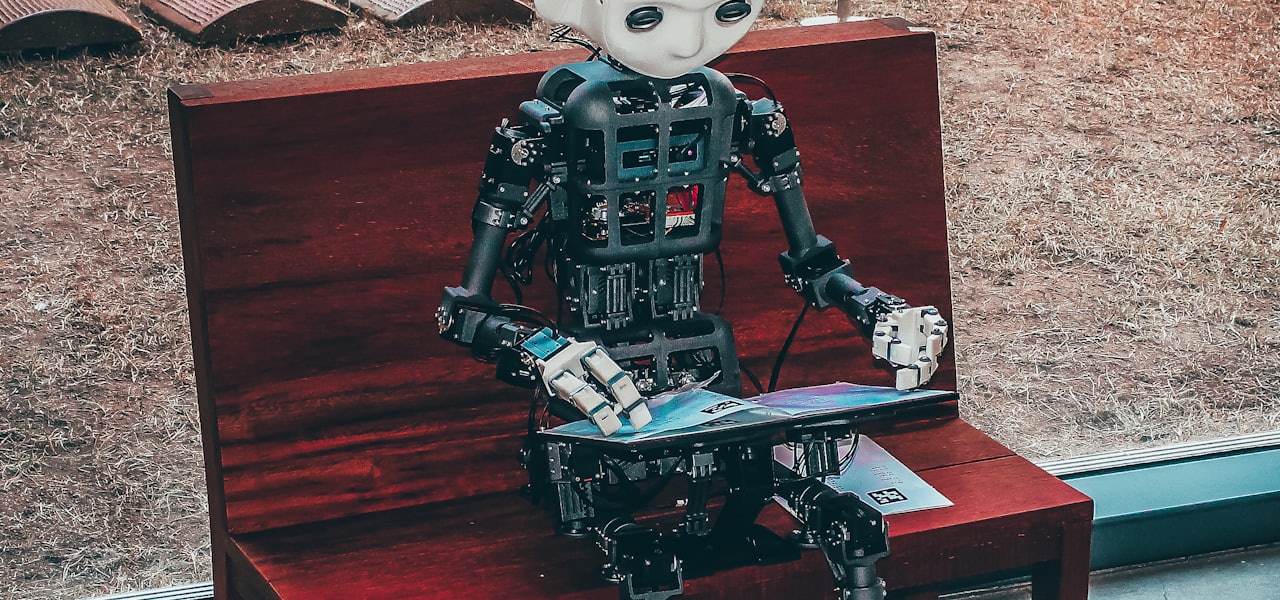
Joint constraints are rotational constraints on the joints of an artificial system. They are used in an inverse kinematics chain, in fields including 3D animation or robotics. Joint constraints can be implemented in a number of ways, but the most common method is to limit rotation about the X, Y and Z axis independently. An elbow, for instance, could be represented by limiting rotation on X and Z axis to 0 degrees, and constraining the Y-axis rotation to 130 degrees. To simulate joint constraints more accurately, dot-products can be used with an independent axis to repulse the child bones orientation from the unreachable axis. Limiting the orientation of the child bone to a border of vectors tangent to the surface of the joint, repulsing the child bone away from the border, can also be useful in the precise restriction of shoulder movement.
Transderivational search
Transderivational search (often abbreviated to TDS) is a psychological and cybernetics term, meaning when a search is being conducted for a fuzzy match across a broad field. In computing the equivalent function can be performed using content-addressable memory. Unlike usual searches, which look for literal (i.e. exact, logical, or regular expression) matches, a transderivational search is a search for a possible meaning or possible match as part of communication, and without which an incoming communication cannot be made any sense of whatsoever. It is thus an integral part of processing language, and of attaching meaning to communication. In NLP (Neuro-linguistic programming), a transderivational search (Bandler and Grinder, 1976) is essentially the process of searching back through one's stored memories and mental representations to find the personal reference experiences from which a current understanding or mental map has been derived. By the end of 1976, Grinder and Bandler had combined Satir’s and Perls’ language patterns and Erickson’s hypnotic language and use of metaphor with anchoring to create new processes that they called collapsing anchors, trans-derivational search, changing personal history, and reframing. A psychological example of TDS is in Ericksonian hypnotherapy, where vague suggestions are used that the patient must process intensely in order to find their own meanings, thus ensuring that the practitioner does not intrude his own beliefs into the subject's inner world. == TDS in human communication and processing == Because TDS is a compelling, automatic and unconscious state of internal focus and processing (i.e. a type of everyday trance state), and often a state of internal lack of certainty, or openness to finding an answer (since something is being checked out at that moment), it can be utilized or interrupted, in order to create, or deepen, trance. TDS is a fundamental part of human language and cognitive processing. Arguably, every word or utterance a person hears, for example, and everything they see or feel and take note of, results in a very brief trance while TDS is carried out to establish a contextual meaning for it. === Examples === Leading statements: "And those thoughts you had yesterday..." the human mind cannot process hearing this phrase, without at some level searching internally for some thoughts or other that it had yesterday, to make the subject of the sentence. "The many colors that fruit can be" likewise starts the human mind considering even if briefly, different fruit sorted by color. "You did it again, didn't you!" This everyday manipulative use of TDS usually sends the recipient looking internally for some "it" they may have done for which blame is being fairly given. Regardless of whether such a matter can be identified, guilt or anger may result. "There has been pain, hasn't there" the mind of a patient suffering an illness will find it very hard or impossible to hear or answer this sentence without conducting internal searches to verify whether this is true or not, or to find an example if so. "You'd forgotten something [or: some part of your body], hadn't you?" the mind usually checks through the various things, or parts of the body, on hearing this, seeing if each in turn has been forgotten. Textual ambiguity: "Do you remember line dancing on the steps?" Without sufficient context, some statements may trigger TDS in order to resolve inherent ambiguity in the interpretation of a posed question. Do I remember a bygone fad called "line dancing on the steps"? Do I remember personally engaging in dancing in the past? Do I remember my routine practice dancing by focusing on the steps of the dance? Do I tend to forget about dancing when I am standing on steps? "Penny-wise and pound the table dance to the beat of a different drummer". The mixing of cliché and stock phrases may trigger TDS in order to reconcile the discrepancies between expected and actual utterances in sequence. Although TDS is often associated with spoken language, it can be induced in any perceptual system. Thus Milton Erickson's "hypnotic handshake" is a technique that leaves the other person performing TDS in search of meaning to a deliberately ambiguous use of touch.
Texture compression
Texture compression is a specialized form of image compression designed for storing texture maps in 3D computer graphics rendering systems. Unlike conventional image compression algorithms, texture compression algorithms are optimized for random access. Texture compression can be applied to reduce memory usage at runtime. Texture data is often the largest source of memory usage in a mobile application. == Tradeoffs == In their seminal paper on texture compression, Beers, Agrawala and Chaddha list four features that tend to differentiate texture compression from other image compression techniques. These features are: Decoding Speed It is highly desirable to be able to render directly from the compressed texture data and so, in order not to impact rendering performance, decompression must be fast. Random Access Since predicting the order that a renderer accesses texels would be difficult, any texture compression scheme must allow fast random access to decompressed texture data. This tends to rule out many better-known image compression schemes such as JPEG or run-length encoding. Compression Rate and Visual Quality In a rendering system, lossy compression can be more tolerable than for other use cases. Some texture compression libraries, such as crunch, allow the developer to flexibly trade off compression rate vs. visual quality, using methods such as rate–distortion optimization (RDO). Encoding Speed Texture compression is more tolerant of asymmetric encoding/decoding rates as the encoding process is often done only once during the application authoring process. Given the above, most texture compression algorithms involve some form of fixed-rate lossy vector quantization of small fixed-size blocks of pixels into small fixed-size blocks of coding bits, sometimes with additional extra pre-processing and post-processing steps. Block Truncation Coding is a very simple example of this family of algorithms. Because their data access patterns are well-defined, texture decompression may be executed on-the-fly during rendering as part of the overall graphics pipeline, reducing overall bandwidth and storage needs throughout the graphics system. As well as texture maps, texture compression may also be used to encode other kinds of rendering map, including bump maps and surface normal maps. Texture compression may also be used together with other forms of map processing such as mipmaps and anisotropic filtering. == Availability == Some examples of practical texture compression systems are S3 Texture Compression (S3TC), PVRTC, Ericsson Texture Compression (ETC) and Adaptive Scalable Texture Compression (ASTC); these may be supported by special function units in modern graphics processing units (GPUs). OpenGL and OpenGL ES, as implemented on many video accelerator cards and mobile GPUs, can support multiple common kinds of texture compression - generally through the use of vendor extensions. == Supercompression == A compressed-texture can be further compressed in what is called "supercompression". Fixed-rate texture compression formats are optimized for random access and are much less efficient compared to image formats such as PNG. By adding further compression, a programmer can reduce the efficiency gap. The extra layer can be decompressed by the CPU so that the GPU receives a normal compressed texture, or in newer methods, decompressed by the GPU itself. Supercompression saves the same amount of VRAM as regular texture compression, but saves more disk space and download size. == Neural Texture Compression == Random-Access Neural Compression of Material Textures (Neural Texture Compression) is a Nvidia's technology which enables two additional levels of detail (16× more texels, so four times higher resolution) while maintaining similar storage requirements as traditional texture compression methods. The key idea is compressing multiple material textures and their mipmap chains together, and using a small neural network, that is optimized for each material, to decompress them.